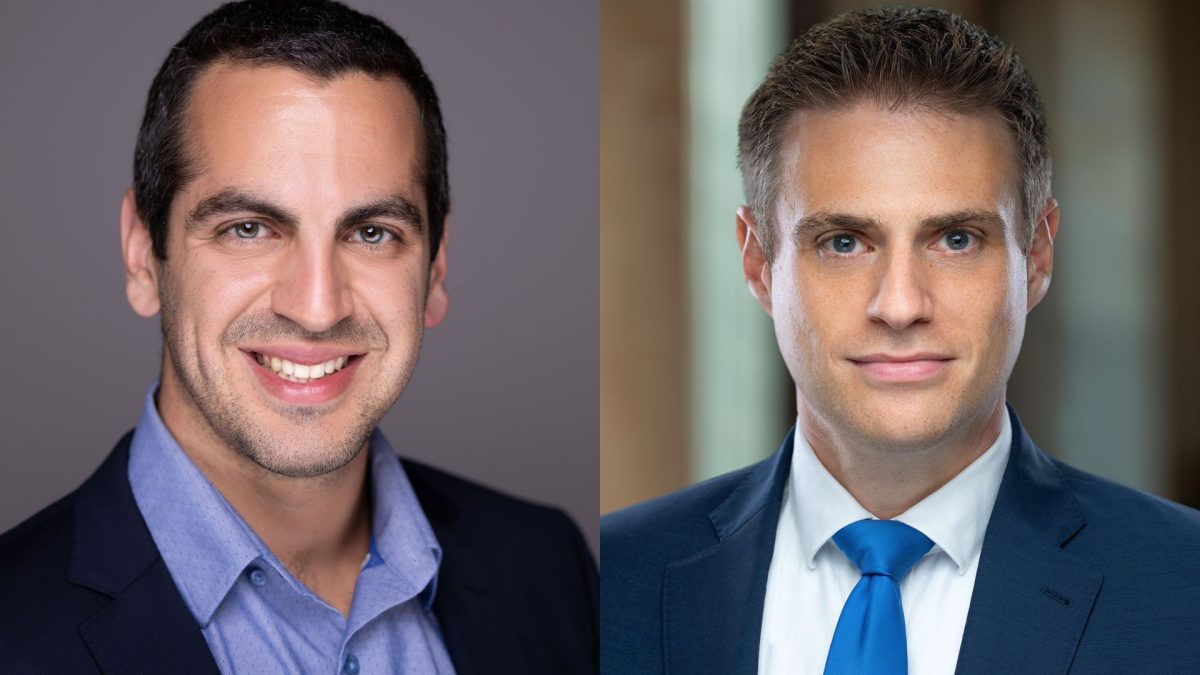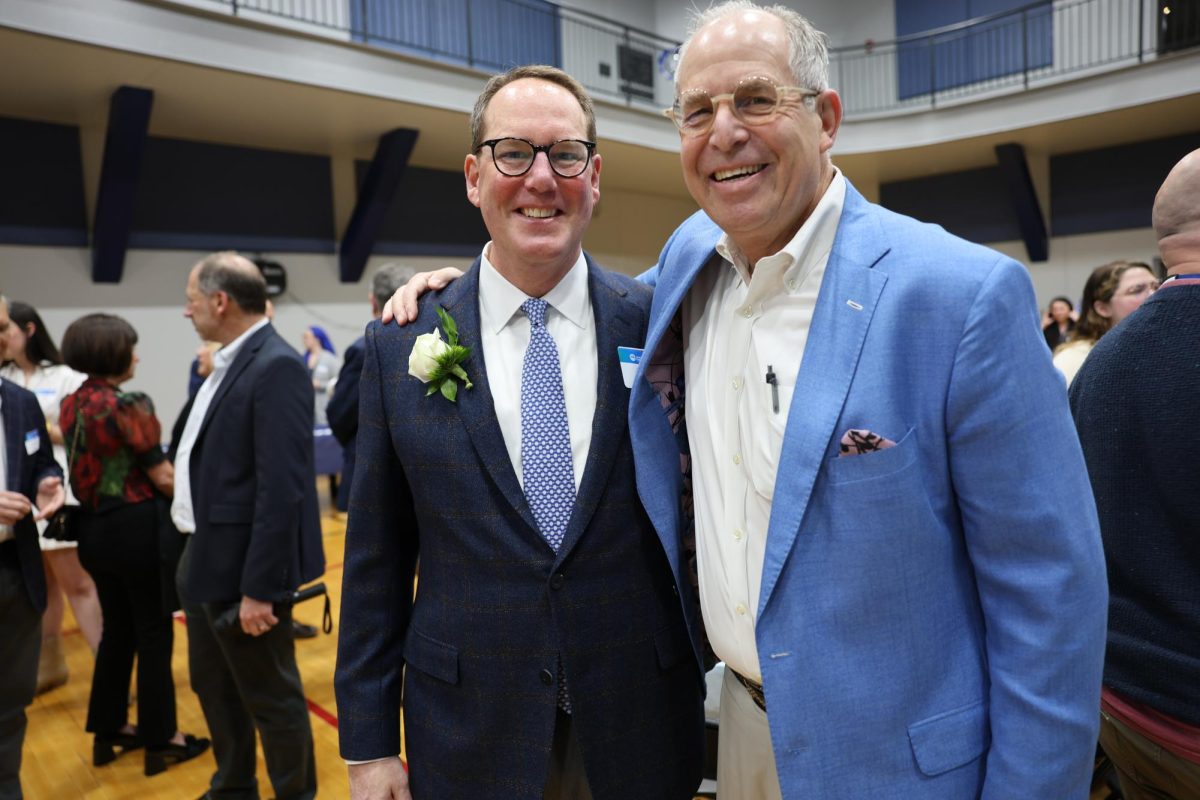


At 3:47 Monday morning, May 11, my phone buzzed with a text from retired St. Louis broadcaster John Pertzborn.
“Visiting Leipzig, Germany synagogue talking with rabbi’s wife,” he wrote.
A few moments later came another message.
“Mostly made up of former Soviet Jews who emigrated in the 90s-2000s.”
ADVERTISEMENT

Then another.
“This is the only synagogue that survived WWII intact.”
I was suddenly wide awake.
History via text message
For four decades, Pertzborn helped explain the world to St. Louis television viewers. But inside Leipzig’s Brody Synagogue, he sounded less like a broadcaster than a man trying to process history in real time.
Pertzborn is in Germany as part of a journalism exchange visit connected to RIAS Berlin, the postwar broadcasting organization founded during the Cold War as “Radio in the American Sector.”
It is not his first connection to Jewish Germany.
“I interviewed the top Berlin rabbi in 1995 for a Channel 5 story,” Pertzborn texted. “It’s amazing to see how much the Jewish community has grown since then.”
The synagogue that survived
Despite having a Monday morning meeting, my history lesson — delivered via text message from a former colleague some 4,600 miles away — continued throughout the morning. Back at the office, I found myself researching the Brody Synagogue between texts.
“The synagogue is the only one to survive Kristallnacht intact in 1938. The reason??? It was attached on both sides to German apartments,” Pertzborn texted. “The Nazis didn’t want the fire spreading.”
Another synagogue in Leipzig was destroyed.
The Brody Synagogue survived, but not untouched. During the war, Nazis emptied the building and later used it for storage. Somehow, records housed inside a neighboring administrative building remained intact.

That detail lingered with Pertzborn.
“The fact the synagogue survived only because Germans lived on both sides of it is something I can’t stop thinking about,” he said. “Had those apartment buildings not been there, it would’ve been destroyed that night in 1938.”
Before World War II, Leipzig was home to thousands of Jews and numerous synagogues. Jewish merchants had lived and traded there for centuries.
By the end of the Holocaust, nearly all of Leipzig’s synagogues had been destroyed, leaving the Brody Synagogue as the lone survivor.
The Jews who came later
The Jewish life that exists in Leipzig today is not simply a continuation of the old community.
In many ways, it is an entirely different chapter.
Pertzborn said Marina, the rabbi’s wife, explained that much of Leipzig’s modern Jewish population is made up of Jews from the former Soviet Union who immigrated during the 1990s and early 2000s.
“She grew up in Ukraine,” he texted.
The next text from Pertzborn carried a deeply St. Louis connection.
“Years ago, the late Richard Hirschfeld, the longtime Euclid Avenue antique dealer known to generations of St. Louisans from the Gaslight Square era, told me his family had roots in the Leipzig region before leaving in the early 1900s,” Pertzborn wrote.
Hirschfeld once suggested there may have been St. Louis Jews connected to the same synagogue before the Holocaust and later during the East German era, though communist authorities did not allow it to function as an active house of worship until after the Berlin Wall fell in 1989.
When Pertzborn asked Marina whether she had encountered the Hirschfeld name in synagogue archives, her answer was candid.
“It’s a common name.”
Vigilance in an uncertain world
Some of Pertzborn’s observations were unexpectedly ordinary.
Marina told him local police regularly monitor the synagogue and even carry keys to the building. Officers on patrol are welcome to stop inside and use the restroom.
The detail was oddly comforting and quietly revealing at the same time.
This was not a museum or archive frozen in time.

It was a living synagogue, an active piece of Jewish life continuing carefully under watchful eyes.
Pertzborn said the visit reminded him of a question he asked the Berlin rabbi back in 1995.
“I remember asking the rabbi, ‘What’s it like being a Jew in Germany today?’” Pertzborn recalled. “And he said, ‘What’s it like being a Jew anywhere in the world? It’s the same.’”
More than 30 years later, Pertzborn said that same sense of vigilance still lingered during this visit.
History keeps talking back
For Pertzborn, this was not the first time forgotten Jewish history had unexpectedly found him.
Last year, while browsing at The Rusty Halo, a secondhand shop in Dogtown, he uncovered a forgotten 1943 wartime recording sent by a young Jewish Marine back to his family in St. Louis. The recording eventually helped reconnect descendants with a voice nearly lost to time.
Now, months into retirement, Pertzborn found himself once again carrying pieces of Jewish memory back home.
Only this time, the messages arrived live from Germany, one text at a time.
ADVERTISEMENT