
HOUSTON, Mo. — When Luigi Toscano was growing up in Germany, he was frustrated by how little he learned about his country’s role in World War II atrocities. That experience led him to create “Lest We Forget,” a Holocaust awareness project that recently completed a three-week residency in Missouri.
Toscano, 53, is driven to make sure younger generations understand the Holocaust. In Houston, a town of about 2,200 people roughly 150 miles southwest of St. Louis, that mission took on a new form.
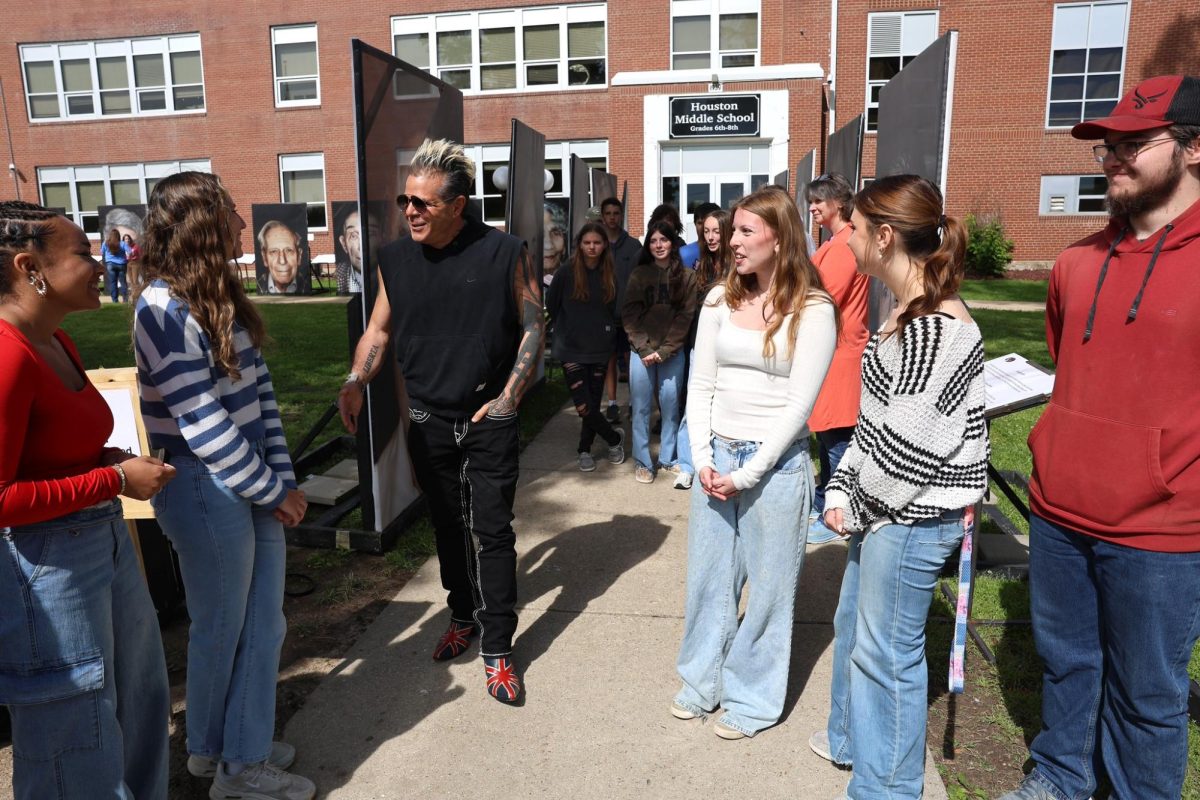
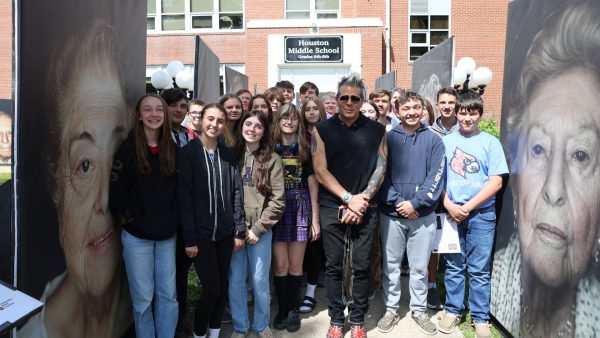
A special version of the exhibit was installed outside the Houston, Mo., R-1 School District, where 20 large portraits of Holocaust survivors stood in a courtyard.
But what made this stop different wasn’t just the images.
It was who helped tell the stories behind them.
Students lead the work
The Houston School District is part of a pilot education program developed with the Missouri Holocaust Awareness Commission and Conversation Builds Character.
ADVERTISEMENT

At Houston High School, teacher Jason Pounds designed the project to be student-led from the start.
“It’s a huge honor,” Pounds said. “We are very fortunate to be the first high school in the United States to host this exhibit. It’s about education, and it’s about awareness.”
Thirteen students participated, each researching a Holocaust survivor featured in the exhibit and writing a short biography focused on resilience and survival.
They also created a pamphlet, complete with QR codes, allowing visitors to learn more about each individual.
When Toscano arrived to set up the exhibit, students were there to help—hauling tools, assembling frames and preparing the display.
An experience that stayed with them
For many students, the impact went beyond a class assignment.
“It was an eye-opener,” said Oliver Greiner, 18. “It was really moving to put a face to the story and learning that this actually happened to real normal everyday people.”
Classmate Kayla Wagner said the experience created a sense of connection.
“I really enjoyed getting to learn about the stories,” Wagner said. “I just knew that it was something special, especially for this community.”
A message beyond the classroom
Toscano spoke at school assemblies and met with community members during the exhibit’s run, emphasizing the importance of education and dialogue.
“If we don’t learn from the past, we are damned to repeat it in the future,” he said.
The project is part of a broader effort to bring Holocaust education into schoolyards, a model already used in more than 100 locations in Germany.
A community response
The exhibit drew visitors from across Houston and neighboring towns, turning the school into a gathering place for reflection and learning.
“The amount of community engagement we’ve seen has been beyond what I ever imagined,” said superintendent Justin Copley.
For educators, that response reinforced the value of hands-on learning.
“Anytime you can involve kids in this type of setup, creation and involvement is a win,” Copley said.
What comes next
Pounds said interest in the program continues to grow, with more than two dozen students already expressing interest in participating next year.
For a small town, the project created something lasting.
Not just an exhibit—but a connection between past and present, built by the students themselves.