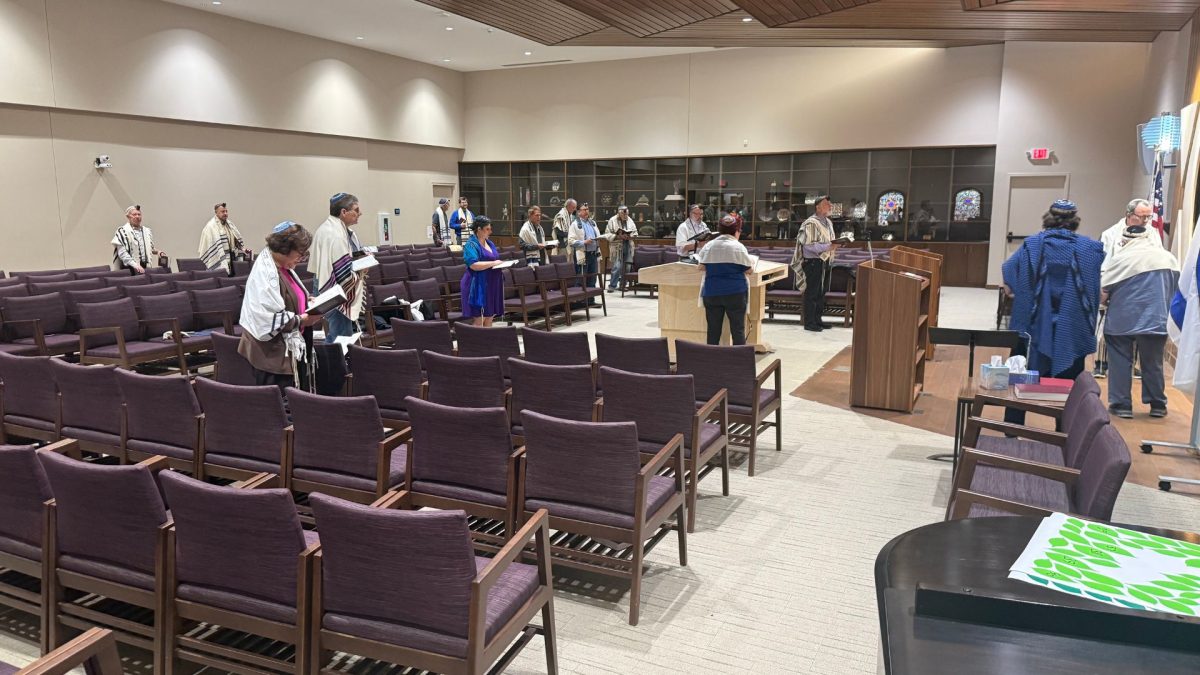

It’s Shabbat in Belleville. About 30 to 40 people make their way upstairs at Agudas Achim Beth Israel, filling a sanctuary that, on most months, sits far quieter.
They came for an Auf-Ruf, but what stood out wasn’t just the occasion. It was the room itself.
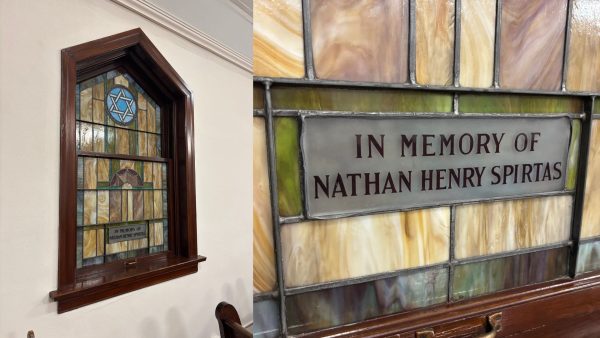
Stained glass windows lined the walls, many bearing names that felt familiar — the kind you grow up hearing on the other side of the river. Families who once built Jewish life in the Metro East, now etched into the building that remains.
The singing started, familiar and easy, like something this group has done together for years.
For a moment, it didn’t feel like the last synagogue in the Metro East. It just felt like a synagogue.
Then reality sets in.
On a typical month, about 10 to 15 people attend services. That’s roughly a third of the congregation.
“It’s small, but it’s devoted,” said Brad Bernstein, one of four current officers who stepped into leadership roles as the congregation began planning for its future.
As one longtime member put it, it’s a small, residual congregation that refuses to die.
The Backstory
Agudas Achim Beth Israel, or AABI, is the last remaining synagogue serving the Illinois side of the St. Louis region.
It didn’t start as one synagogue. Decades ago, two congregations — Temple Beth Israel in Belleville and Agudas Achim in East St. Louis — merged as the local Jewish population began to shrink. One was Reform, the other Orthodox. What remains today carries pieces of both.
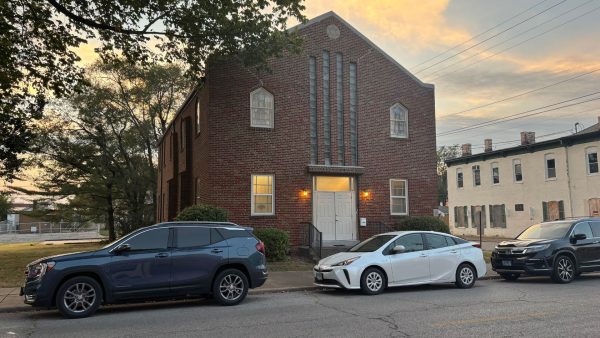
At one point, there were several synagogues across the Metro East, serving a much larger Jewish population. Families lived in East St. Louis, Granite City and Belleville, building a network of Jewish life that, over time, moved west.
Most left.
Some stayed.
And for those who did, AABI remains what Bernstein calls a “spiritual home base” — a place for families who aren’t going to drive to St. Louis but still want a connection to Jewish life.
“It exists for the people who are here,” he said. “They needed that connection to Judaism. They weren’t going to drive across the river.”
A full circle moment
That connection was on full display during the service.
Emma Magner stood with her fiancé as part of the Auf-Ruf, looking out at the same sanctuary where she grew up.
“Just growing up here and now coming back as an adult… it’s full circle,” she said. “I feel so loved and blessed to be here tonight with my community that helped raise me.”
Moments like that explain why AABI still matters, even as its numbers shrink.
Built to adapt
Over the years, the congregation has adjusted to match its reality.
Weekly services became monthly, now held on the second Friday. Larger gatherings — Passover seders, High Holidays, Hanukkah — still draw crowds, sometimes up to 40 people.
About a decade ago, the congregation installed an elevator, choosing accessibility over preserving its financial cushion. The goal was simple: keep the upstairs sanctuary usable for older members who make up the heart of the community.
“It’s more than just a building,” Bernstein said. “It’s where people have anchored their lives.”
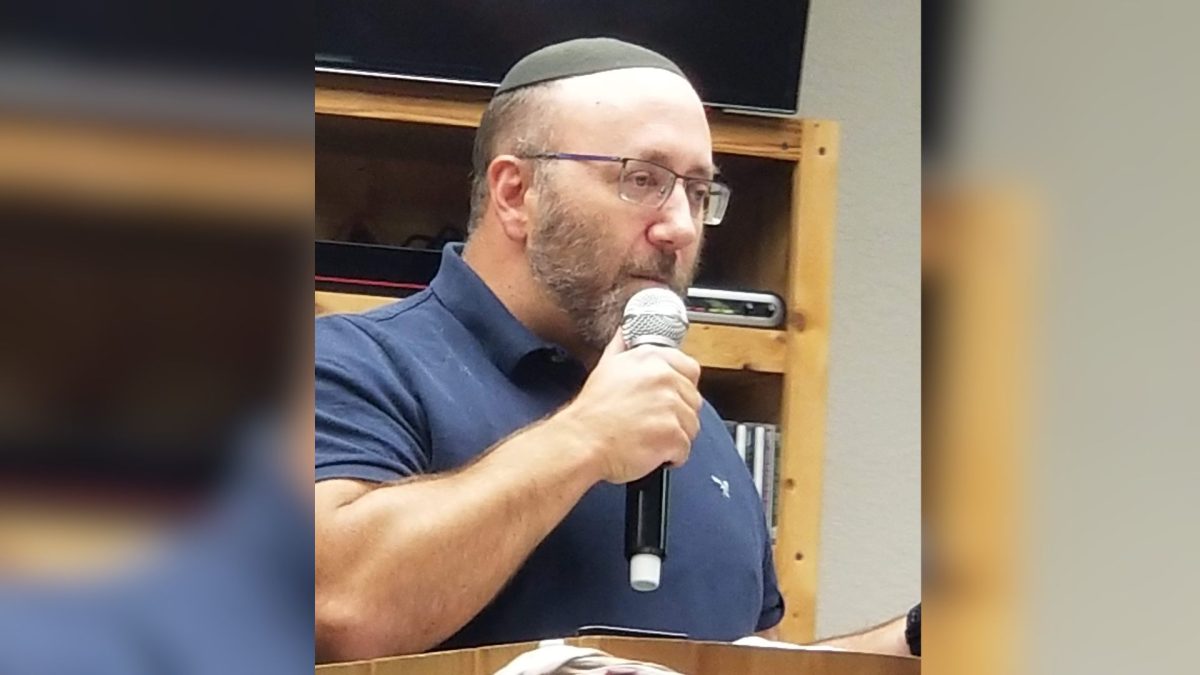
Lay leader Josh Fabisoff, who studied in yeshiva and in Israel, leads services with a mix of knowledge and ease that keeps people engaged.
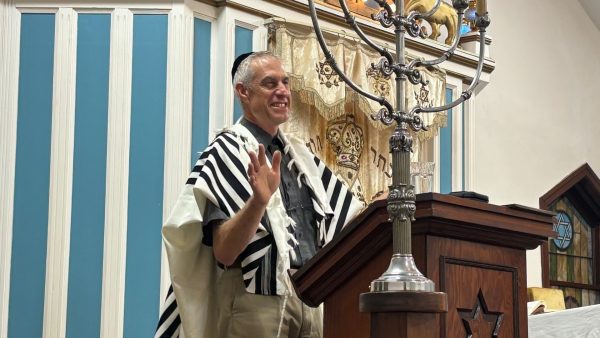
“In a small shul like this, everyone has a voice,” he said. “I’m not leading for hundreds. I’m leading for friends.”
Bernstein said that kind of presence makes a difference.
“You learn from him,” he said. “He makes it something people want to come back to.”
Still, there’s no avoiding the larger question: what happens when the congregation can no longer sustain itself?
Planning for what comes next
That question is most pressing when it comes to the cemetery.
Known as B’nai Israel Cemetery, the burial ground dates back to the 1800s, originally established by local Jewish families who wanted a place of their own rather than relying on St. Louis. Decades later, with those families gone, the responsibility shifted to the synagogue.
Now, a small group of members maintains it, cutting grass, repairing fences and checking on headstones.
At one point, a visitor even called to report the cemetery’s well wasn’t working — something Bernstein didn’t even know existed.
There’s no formal association overseeing it. No long-term funding structure. Just a handful of people making sure it doesn’t fall into neglect.
“It worries me,” said longtime member Terri Riutcel. “I want to know who’s going to take over this when we’re gone.”
Then she added, “You just can’t get blood from a turnip.”
The concern isn’t abstract. It’s right in front of them. Without a formal structure or funding, the cemetery’s long-term future is uncertain.
That’s where the Jewish Community Legacy Project comes in.
Working with congregations like AABI, the national initiative helps small communities plan for sustainability — or, when necessary, a responsible transition. The work isn’t about saving every synagogue. It’s about helping communities decide what comes next — whether that’s sustainability, transition, or preserving what can’t be replaced.
“It forces you to think about the future in a real way,” Bernstein said. “Not just how you keep going, but how you take care of what matters if you can’t.”
For AABI, that includes the possibility of creating an endowment to ensure the cemetery can be maintained in perpetuity.
Holding on, for now
For now, the synagogue remains active.
Not large. Not growing.
But present.
It’s not the kind of place measured in numbers. It never really was.
“We are a community of people who care about each other,” said Riutcel. “That’s it. That’s why we’re still here. We show up.”
And on a Friday night in Belleville, with 30 or 40 people filling a sanctuary built more than a century ago, that still feels like enough.
ADVERTISEMENT