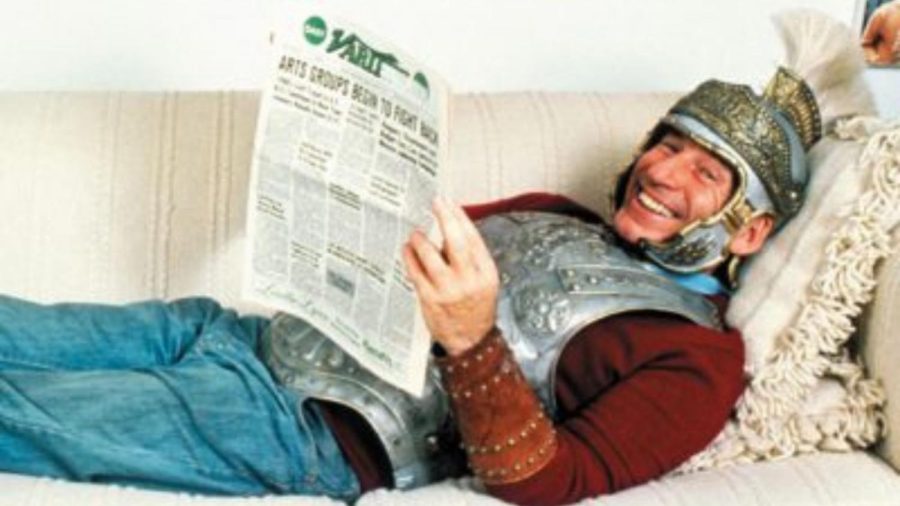

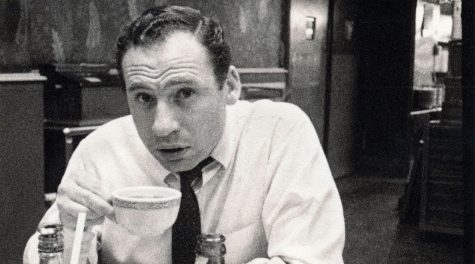
A new two-part HBO documentary, “Mel Brooks: The 99 Year Old Man!” premieres Jan. 22 and 23, tracing the career of one of American comedy’s most influential figures. Directed by Judd Apatow and Michael Bonfiglio, the film revisits Brooks’ work from early television and the “2000 Year Old Man” to “Blazing Saddles,” “Young Frankenstein,” “The Producers” and beyond, with interviews from comedians he helped shape.
It’s a reminder of how deeply Brooks is woven into American comedy, not just through the comedians and filmmakers he influenced, but also through regular people like me who grew up absorbing his rhythms, irreverence and way of seeing the world. In that sense, at least in my eyes, he may be the most influential Jewish comedian in history.
It’s also a reminder of how early he showed up in my life.
Left alone in a theater
I was 8 years old when I found myself at the old Des Peres 4 Cine watching “Silent Movie.” Somewhere during the film, my father’s beeper went off. He was an OB-GYN and a baby was on the way. He told me he’d be right back.
ADVERTISEMENT

And then he left.
This was a different time. Back then, you didn’t show up to a movie at a precise start time. You arrived when you arrived, sat down and if you missed the beginning, you stayed until the movie looped back around. So I stayed. For hours. I probably watched “Silent Movie” three or four times straight before he returned to pick me up.
Before anyone screams bad parenting, the theater manager was one of my father’s patients and kept an eye on me the entire time. As far as I knew, I was in movie heaven. I was fine. Better than fine. Years later, I realized my father had given me a rare opportunity to absorb humor.
Learning Brooks’ grammar
As 8-year-old me sat there watching Brooks, Marty Feldman and Dom DeLuise careen around Los Angeles, I was taking in things that were innately Brooks. The three of them felt like a loving tribute to the Three Stooges, chaos built on precision, stupidity executed with intelligence.
There were the intentionally mismatched title cards and dialogue, where polite, innocent words flashed on the screen while the characters’ mouths clearly formed agitated, curse-filled tirades. Yes, I knew curse words. There was also the physical comedy synced to unexpected sound effects, like Feldman getting trapped between elevator doors, his flailing perfectly timed to the clatter of a pinball machine.
Even without realizing it, I was learning Brooks’ grammar, how slapstick, satire and rhythm worked together to make something unforgettable.
How it clicked as Jewish
The Jewishness of Mel Brooks didn’t arrive for me all at once. It revealed itself gradually, through sound and repetition.
Born Melvin Kaminsky in Brooklyn in 1926, Brooks channeled the Yiddish accents, cadences and sensibilities of his old neighborhoods into his comedy. You could hear it in the complaining rhythms of the “2000 Year Old Man,” a routine he created with Carl Reiner and in the way his characters argued, negotiated and schemed their way through the world.
He didn’t just make Jewish jokes. He built Jewish obsessions into the structure of his work. In “The Producers,” two Jewish characters hatch a plan so outrageous it could only come from a place of cultural anxiety and audacity, staging a Broadway musical about Hitler not to honor him but make fun of him.
That same instinct showed up in “Blazing Saddles,” especially in the scene where Brooks appears as a Yiddish-speaking Native American chief. He wasn’t explaining Jewishness or easing anyone into it. He simply dropped it into a Western and trusted the audience to keep up.
Certain lines never leave you. Just the other day, I found myself using this one without thinking: “The Lord Jehovah has given unto you these fifteen,” followed by the crash. “Oy. Ten. Ten commandments for all to obey.” That’s not nostalgia. That’s wiring.
Why it still matters
I’m not a comedian, but Brooks shaped how I understand humor. He once described mocking Nazis as a form of revenge, taking away their power through laughter. That idea stuck with me. Humor belongs, and maybe especially, in places where it feels uncomfortable.
Which is why this documentary feels timely. Comedy today is often politicized, dissected and pre-litigated. Brooks’ work reminds us that funny never goes out of style. You either recognize it or you don’t. That part hasn’t changed.
If Mel Brooks were sitting across from me reading this, I wouldn’t overthink it. I’d just say thank you. Thank you for recognizing how funny Yiddish is and for keeping it funny and for reminding us that beneath the legacy he is a simple Jewish guy who knew how to make people laugh.
| RELATED: A history of Mel Brooks as a ‘disobedient Jew’