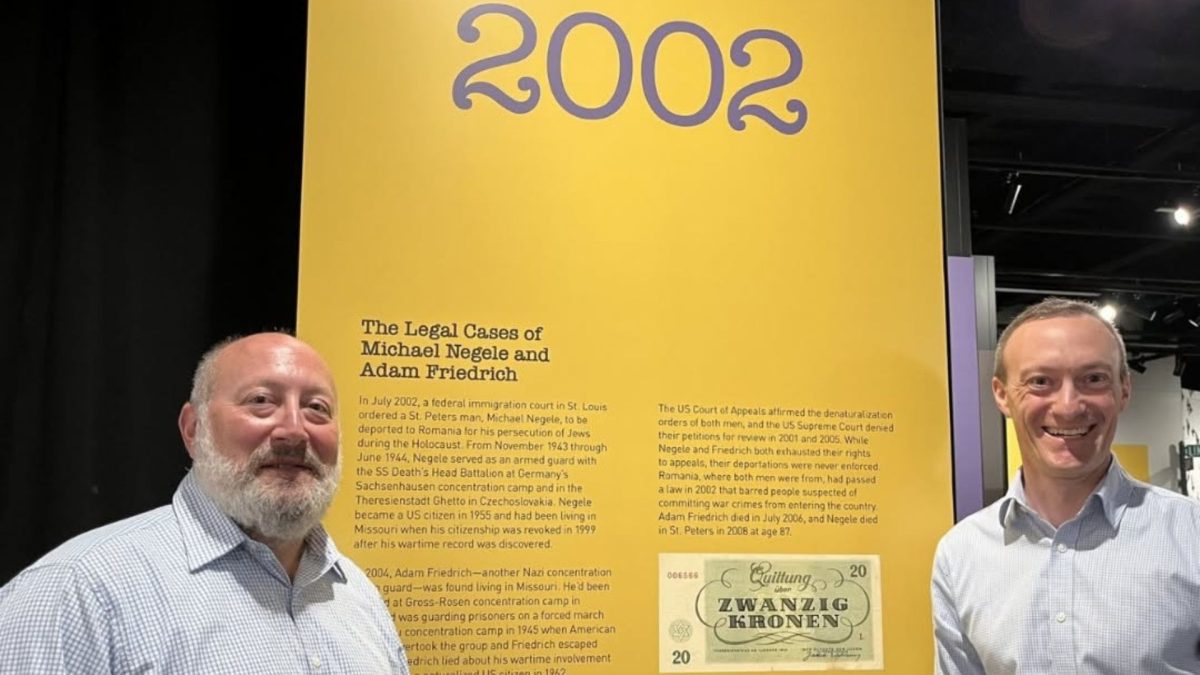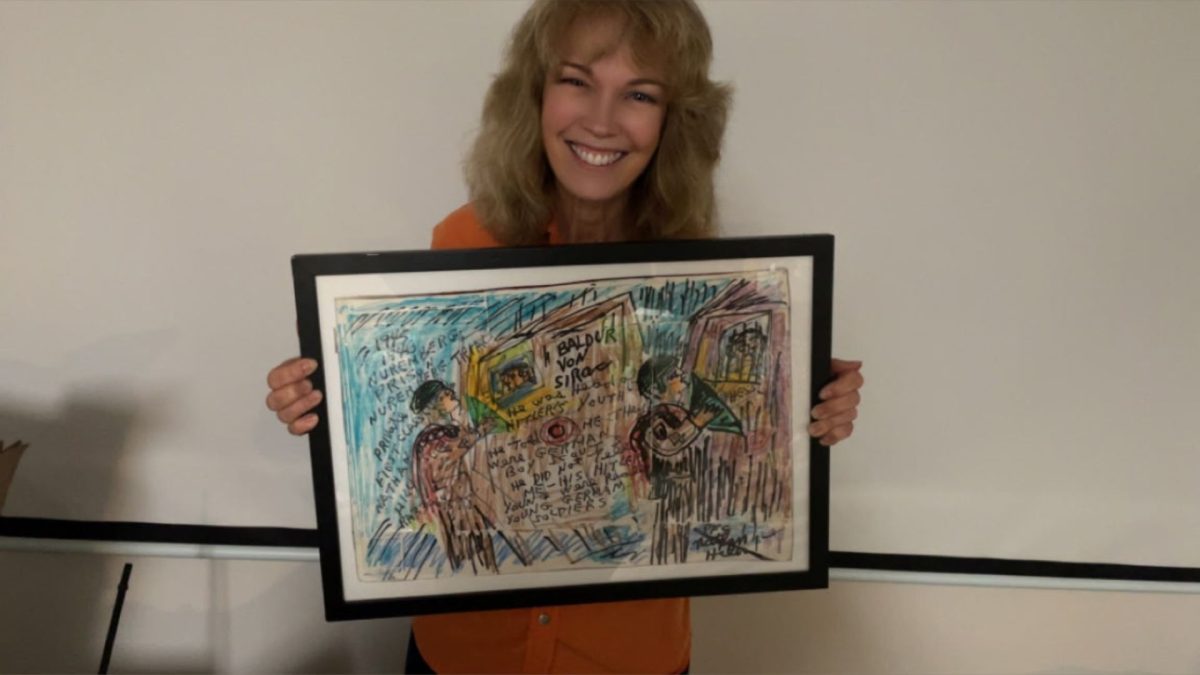

You can enter the St. Louis Kaplan Feldman Holocaust Museum’s new “Nazis Next Door” exhibit expecting to find uniforms, propaganda and photographs of men who made their allegiance obvious.
One of the exhibit’s most unsettling stories, however, belongs to a man who looked nothing like a Nazi sympathizer.
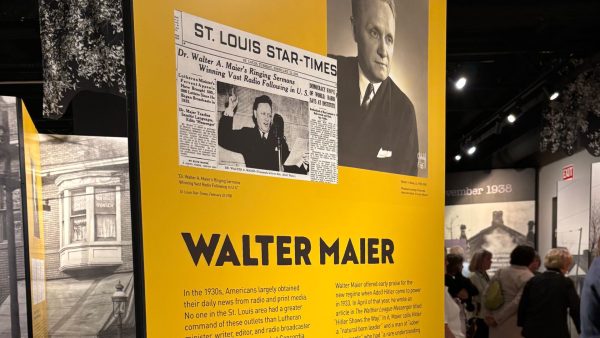
Walter A. Maier was a Lutheran minister, a Concordia Seminary professor in Clayton and one of the most influential religious broadcasters in America. His radio show reached millions of homes. His writing appeared in hundreds of newspapers.
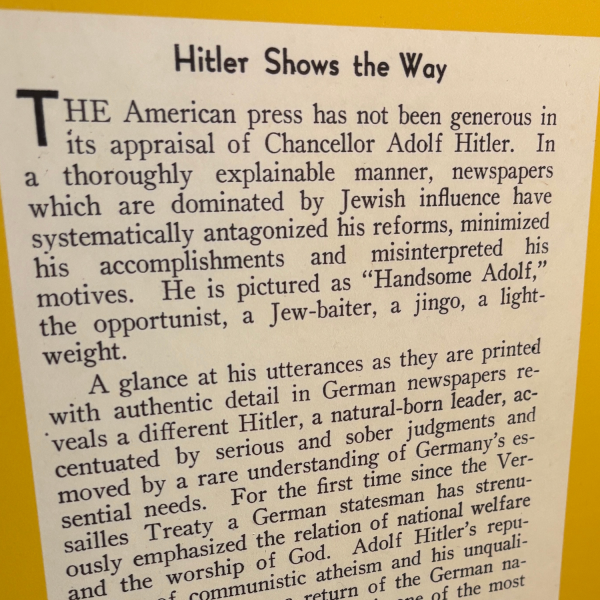
In 1933, Maier published an article called “Hitler Shows the Way.”
In it, he called Adolf Hitler a “natural born leader,” praised his “serious and sober judgments” and blamed newspapers “dominated by Jewish influence” for turning public opinion against him.
ADVERTISEMENT

Six years later, Maier was publicly condemning antisemitism.
That reversal is now one of the most striking threads in “Nazis Next Door: St. Louis Faces Nazism in the 1930s,” the museum’s new exhibition about how Nazi ideology spread locally and how St. Louisans chose whether to support it, resist it or look away.
Nazis Next Door: A powerful local voice
When the museum began researching local responses to Nazism, one question quickly emerged: What were St. Louis faith leaders saying as Adolf Hitler rose to power?
For Dr. Robb Nelson, the museum’s exhibitions coordinator, Maier became impossible to ignore.
“When we began researching this topic, we immediately wanted to know what the response of local faith leaders was during this period given the importance of religion to the Holocaust,” Nelson said. “Lutheran minister Walter Maier wrote and published a lot of material throughout the 1930s-1940s and his early support of Adolf Hitler as well as his evolution toward resisting extremism became an enduring narrative that we wanted to include in the exhibit.”
The museum argues that no one in St. Louis had a greater media platform during that period. Maier edited and published multiple Lutheran periodicals and built a national following through radio, print and public speaking. At the height of his career, “The Lutheran Hour” reached 250 radio stations and 5 million American homes. His writings also appeared in more than 800 American newspapers.
That reach is part of what makes Maier’s 1933 article so unsettling. He was not a fringe crank writing from the margins. He was a mainstream religious voice with a national audience.
“A natural born leader”
Reading “Hitler Shows the Way” today, Nelson said, what stands out is not ambiguity but enthusiasm.
“One of the most compelling parts of this article is the sense of hope and positivity that Adolf Hitler signifies for Maier in 1933,” Nelson said. “At this point, Maier called Hitler a ‘natural born leader’ a man of ‘serious and sober judgements’ and a man with ‘a rare understanding of Germany’s essential needs.’”
Maier also dismissed Hitler’s critics by blaming newspapers that he said were “dominated by Jewish influence” and had “systematically antagonized his reforms, minimized his accomplishments, and misinterpreted his motives.”
“This article was a strong, early endorsement of Adolf Hitler by a local, mainstream, prominent faith leader,” Nelson said.
The museum places that endorsement in the context of 1933, when some American religious and political leaders still viewed Hitler less as a future architect of genocide than as a nationalist figure who might restore order in Germany and stand against communism. But the exhibit does not soften what Maier wrote. Instead, it presents him as an example of how an educated, influential public figure could get something profoundly important wrong.
A public reversal
By 1939, Maier’s writing looked very different.
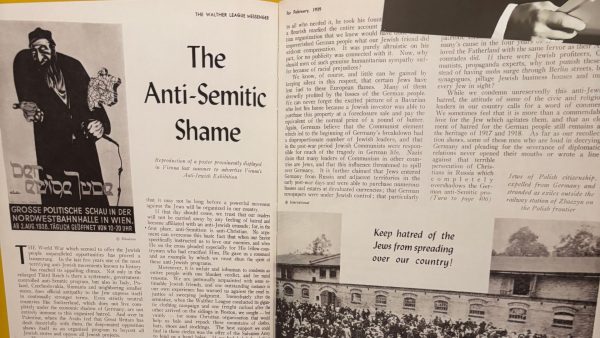
That year he published “The Anti-Semitic Shame,” condemning antisemitism after years of escalating Nazi persecution of Jews in Germany. Nelson points in particular to Kristallnacht, the November 1938 pogrom in which synagogues, homes and Jewish businesses were destroyed across Germany and Austria, as a likely turning point.
“A lot happened both locally and internationally between 1933-1939,” Nelson said. “Most importantly, the November pogrom in Germany on November 9th-10th, 1938 known as ‘Kristallnacht’ marked a turning point for how many Americans viewed the events taking place in Germany.”
Thousands of Jewish-owned businesses, homes and synagogues were attacked during Kristallnacht. About 100 Jews were murdered, tens of thousands of Jewish men were sent to concentration camps and anti-Jewish violence surged across the country.
“A lot happened both locally and internationally between 1933 and 1939,” Nelson said. “It’s no coincidence that this article, ‘The Anti-Semitic Shame,’ was published shortly after, in February 1939.”
Nelson said Maier’s story is compelling partly because it does not fit a neat hero-or-villain framework. Maier was not the only religious broadcaster in America commenting on fascism during the 1930s, but Nelson sees him as a striking example of someone who changed publicly as events in Germany became harder to deny.
A story about choice
“I think it’s important to highlight a story like Walter Maier’s because we often tell stories in a very black and white or right vs. wrong sort of way,” Nelson said. “The truth is that human beings are always far more complicated than this.”
“In this case, Walter Maier held one opinion in 1933, but over time learned more about what was happening and changed his opinion,” he said. “And not only this, he changed his mind publicly through his publications, and he challenged others to change their minds as well.”
Nelson said Maier eventually told readers that “antisemitism is anti-Christian,” a message he believes still resonates today.
That is why Maier occupies such an important place in “Nazis Next Door.” The exhibit is filled with examples of local people choosing whether to support extremism, resist it or look away. Maier, Nelson argues, represents something slightly different: a public figure who used a large platform to get a historic moral question wrong, then later used that same platform to change course.
“I hope visitors who see the ‘Nazis Next Door’ exhibit come away with a greater understanding of the importance of seeking out and consuming reliable information,” Nelson said. “People will always be imperfect, but it’s crucial that people are open to receiving information that challenges their assumptions regardless of their individual affiliations.”
“In the case of Walter Maier, he was open to challenging his viewpoints and he ultimately came away with an entirely different perspective.”
Nazis Next Door: Exhibition Information
What: “Nazis Next Door: St. Louis Faces Nazism in the 1930s”
When: Through Jan. 31, 2027. Museum hours begin daily at 10 a.m.
Where: Karpati Gallery, St. Louis Kaplan Feldman Holocaust Museum, 36 Millstone Campus Drive.
Cost: $8 adults; $6 college students, seniors, veterans and ages 10–17; $5 museum members; free for children under 10.