The spray paint showed up overnight.
Five cars. Same symbol. A Nazi swastika.
By morning, neighbors had seen the footage, recognized the man and called police. Within days, an arrest was made.
It was fast. Clean. Solved.
And it still didn’t feel like the end of anything.
The pattern
Because it wasn’t.
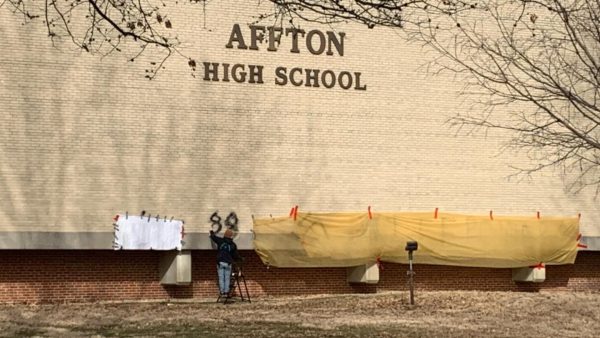
Over the past year, antisemitic graffiti has shown up in local schools, including incidents in Clayton and Affton. In O’Fallon, it appeared inside a home under construction.
Then came something more serious.
In Clayton, an antisemitic arson attack destroyed cars outside a Jewish family’s home — a case that remains unsolved months later, even as investigators continue to ask for tips.
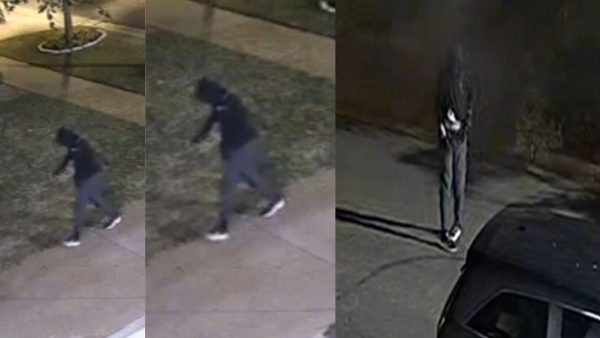
Another incident. Another response. Then, eventually, another incident.
Missouri lawmakers have pointed to a more than 300% rise in antisemitism since October 2023, a jump that has pushed the issue from something discussed in broad terms to something showing up in classrooms, neighborhoods and police reports.
The response
The state has responded.
Last week, Missouri Gov. Mike Kehoe signed House Bill 2061 into law, adopting the International Holocaust Remembrance Alliance’s working definition of antisemitism and requiring schools and universities to treat antisemitic harassment with the same seriousness as other forms of discrimination.
Supporters say the law gives educators clearer tools and sets a standard for how incidents should be handled.
It also sends a message that what’s happening isn’t abstract.
It’s local.
But policy moves slower than a person with a can of spray paint.
And it doesn’t explain why the incidents keep coming.
Trying to interrupt it
That question is starting to shift the focus from response to prevention.
At the St. Louis Kaplan Feldman Holocaust Museum, an upcoming panel, “Viral Hate: antisemitism, conspiracy culture and online radicalization,” will bring together researchers and journalists who study how antisemitism spreads, particularly online, and how it moves from language into action.
The panel will be moderated by Mark Weitzman, who has worked with the International Holocaust Remembrance Alliance on global antisemitism policy. He’ll be joined by Tal-Or Cohen Montemayor, who tracks antisemitism across digital platforms, along with journalist Mike Rothschild and investigative reporter Anna Merlan, both of whom have spent years reporting on conspiracy culture and extremist movements.
Taken together, their work focuses on the same question now surfacing locally: how ideas that begin online move into real-world behavior.
The goal is not just to track incidents, but to understand the pipeline behind them — how conspiracy theories spread, how individuals are pulled in and how those beliefs can surface later in places that feel far removed from where they started.
“We’re at a moment that demands more than awareness. It demands understanding and action,” said Helen Turner, director of education at the Holocaust museum. “What makes this panel different is that it doesn’t just respond to the incidents we’re seeing across St. Louis. It goes deeper, examining how antisemitism is fueled and amplified, particularly through online extremism.
“Our speakers will unpack how conspiracy theories spread, how individuals are drawn into these movements, and how digital spaces accelerate hate in ways that often go unseen. By focusing on these root causes, we move beyond reacting to each individual act and instead begin to disrupt the cycle itself.”
Event Listing
What: Viral Hate: antisemitism, conspiracy culture and online radicalization (panel discussion)
Who: Moderated by Mark Weitzman, with Tal-Or Cohen Montemayor, Mike Rothschild and Anna Merlan
When: Thursday, May 14, 2026 | 6:00–7:30 p.m.
Where: St. Louis Kaplan Feldman Holocaust Museum, 36 Millstone Campus Drive
Cost: $8
More info: The panel will examine how antisemitism spreads online and how those ideas translate into real-world incidents, with a focus on how individuals and communities can respond.