
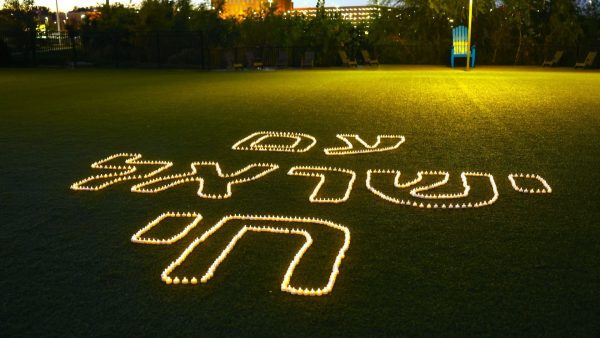
To Danny Cohn, president and CEO of St. Louis Jewish Federation, the anniversary of the Oct. 7 attacks should be a reason for unity.
“Oct. 7 is a standalone day regardless of the atrocities that came after, during the war and as we wait for the return of the hostages,” Cohn said. “I think we have not given ourselves permission to hold Oct. 7 as a sacred remembrance for the whole Jewish community.”
On Sunday Oct. 5, Federation held “Marking October 7” at the St. Louis Music Park in Maryland Heights. The first half of the evening’s events was interactive and included several tents, each containing different activities. The second half was a conversation among Cohn, Nova Music Festival survivor Ron Segev and Oren Hazan, an Israel Defense Forces commander, who fought Hamas on Oct. 7.
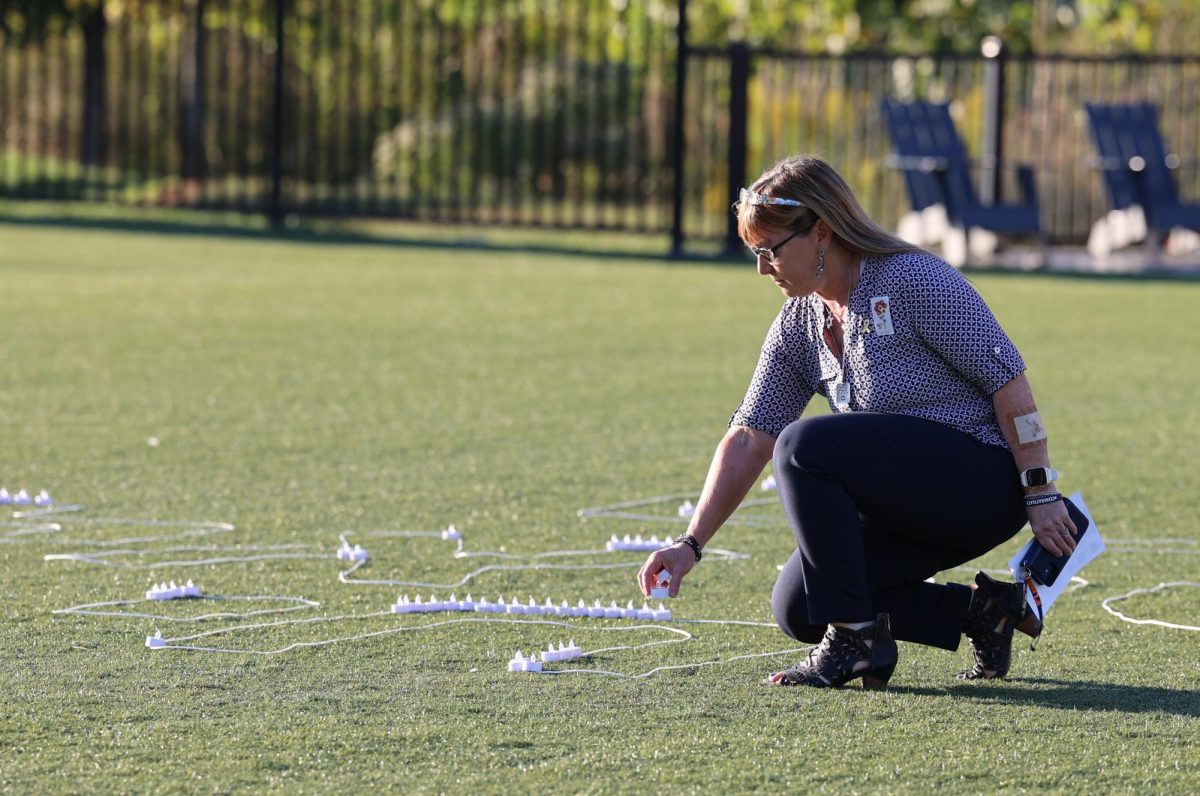
Despite being hosted by Federation, Cohn said the event was a communal effort.
“This was not the Federation determining what went on here today,” Cohn said. “Federation provided the space and financial assistance, [but] the community decided what they wanted.”
Cynthia Wachtel, manager of Israel Emissary Initiatives at Jewish Federation, said this year the event planning committee, which contained a mix of Israelis and Americans, was focused on bringing together people of all ages.
ADVERTISEMENT

“We wanted to elicit emotion and togetherness and a sense of community and honor all the people that were killed and affected and traumatized,” she said.
Jamie Levison and Allison Galanti both went to the one-year anniversary vigil in 2024, held at the Jewish Community Center, by themselves. This year, even though the event contained some mature content, they brought their children.
“This is something that happened to our people, and I want them to feel that and know that,” Galanti said.
She and Levison believe “education is power,” and that their kids will learn about Oct. 7 one way or another. They aim to create a space where they feel comfortable asking questions about what they see, including one tent at the event that had photos of all the victims from the Nova festival.
“My daughter had a lot of questions,” Levison said. “Specifically, ‘why are these people so young?’ I told her the truth, they were at a music festival enjoying the day, and they were murdered. It’s terrible, and we live in a world where, unfortunately, terrible things are happening all the time.”
In addition to a short Oct. 7 documentary and the Nova festival tent, there was a virtual reality experience called “Survive to Tell” where participants could experience hearing testimony from survivors while feeling like they were standing where the atrocities took place.
Aviv Kurnas is from Balfour near Tel Aviv. For the last 18 months, he has traveled throughout the United States with “Survive to Tell” helping facilitate the experience for more than 30,000 people.
“It’s very overwhelming,” he said. “It’s not like hearing a testimony more than living one. Instead of traveling to physically stand in the Nova site, you’re basically being transformed there.”
Ilanit Michelson went to the Nova festival site after Oct. 7 to volunteer. She was struck by the intensity of the virtual reality experience.
“It’s very hard to be seeing all of these video. When you hear the witnesses right in front of you that’s really hard,” she said.
Hazan, the IDF speaker, was heading to a vacation when the Oct. 7 attack began. That day he was sent to Be’eri, roughly three miles from Gaza, where he fought for 60 hours and rescued 25 families.
“Every step I entered into Be’eri was another layer of chaos,” Hazan said.
He wants people to understand his perspective of what happened on Oct. 7 and believes Jews across the globe should stick together.
“I would say, the [perspective] of commanding as a reservist, to stand up and run into the fire. I think this is what has defined us as [an] Israeli and Jewish community all over the world.”
Nova festival survivor Segev re-told his experience sometimes through tears. He recounted running away from terrorists with his brother unsure if they were going to survive. His experience on Oct. 7 left him with “an invisible pain,” he continues to reckon with.
“It’s a decision to live in pain all the time and be depressed or be able to enjoy life,” he said. “I still have a lot of battles, every time I go back to Israel I suffer a small depression, but I decided inside me that I’m not going to be the victim.”
Segev focuses on building inner strength so that when symptoms of PTSD flare up, they are no longer debilitating.
“I will keep going to music festivals, I will keep sharing my story even though it’s super hard because I choose life,” he said.