
One of my favorite stories I’ve written since joining the Jewish Light dates back to 2021, when I stumbled onto the story of Sol Star, a Jewish founder of Deadwood whose life helped shape the Wild West. I loved the reporting. I loved the headline. I thought it was a great piece.
Almost no one read it.
So, when I recently came across a new story in the Forward by historian Austin Albanese about why so many small-town Jews were buried in big cities, I stopped. As I read, I kept thinking about Sol Star and wondered if Albanese’s work finally explained the why behind a detail that always felt curious.
Why is Sol Star buried in St. Louis?
The man who helped build Deadwood
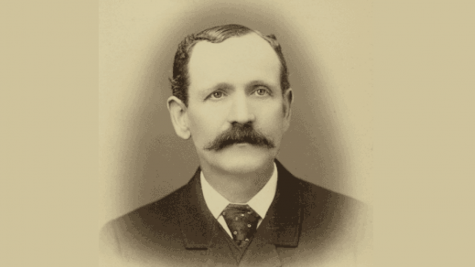
Sol Star was a Jewish entrepreneur, a civic leader, the town’s first postmaster, a fire chief and a three-term mayor. When he died in 1917, his funeral was reportedly the largest Deadwood had ever seen.
ADVERTISEMENT
Born in Bavaria in 1840, Star came to the United States as a child, spending time in Ohio and Missouri before heading West. He eventually settled in Montana, where he formed a business partnership and a lifelong friendship with Seth Bullock. When gold was discovered in the Black Hills, the two followed opportunity into what would become Deadwood.
What began as a hardware business quickly expanded. Star was involved in real estate, livestock, milling and hospitality, including the Bullock Hotel, which still stands today. He helped organize Deadwood’s first fire department, served as its first postmaster and became one of its most trusted civic figures. He was not passing through. He was part of the town’s backbone.
The funeral Deadwood never forgot
When Star died, Deadwood mourned him as one of its own. Businesses closed. Neighbors gathered. It was a civic moment, a public expression of loss for a man whose life had been deeply woven into the place.
As Albanese documents, this kind of mourning was common in towns like Deadwood, even when formal Jewish institutions were absent. Communities showed up for Jewish residents who had helped shape local life, honoring them publicly even if they did not share their faith. Albanese describes this as a kind of civic shiva, where grief was local even when ritual was not.
Why St. Louis?
Sol Star’s grave is in St. Louis, at New Mount Sinai Cemetery, exactly 991 miles from the frontier town he helped shape.
The simplest answer is that his family chose it. But Albanese’s reporting shows that this decision fit a broader historical pattern. Across the Midwest and the American West, Jewish families often lived in towns without synagogues, rabbis or cemeteries. When someone died, mourning happened at home, but burial took place in regional Jewish centers like Cincinnati, Chicago and St. Louis, where Jewish cemeteries and communal continuity already existed.
Deadwood eventually established a Jewish section at Mount Moriah Cemetery, and many Jewish pioneers are buried there. But Star’s final journey followed a familiar path. A life lived on the frontier, and a burial in a city that anchored Jewish communal life.
Sol Star was not an exception. He was representative.
A frontier story that ends at home
Deadwood claimed him in life. St. Louis claimed him in death.
Albanese notes that Jewish history in small towns is often overlooked because the graves are elsewhere. Sol Star’s story shows why that matters. His headstone may be in St. Louis, but his legacy belongs to both places, the city that buried him and the town that mourned him.