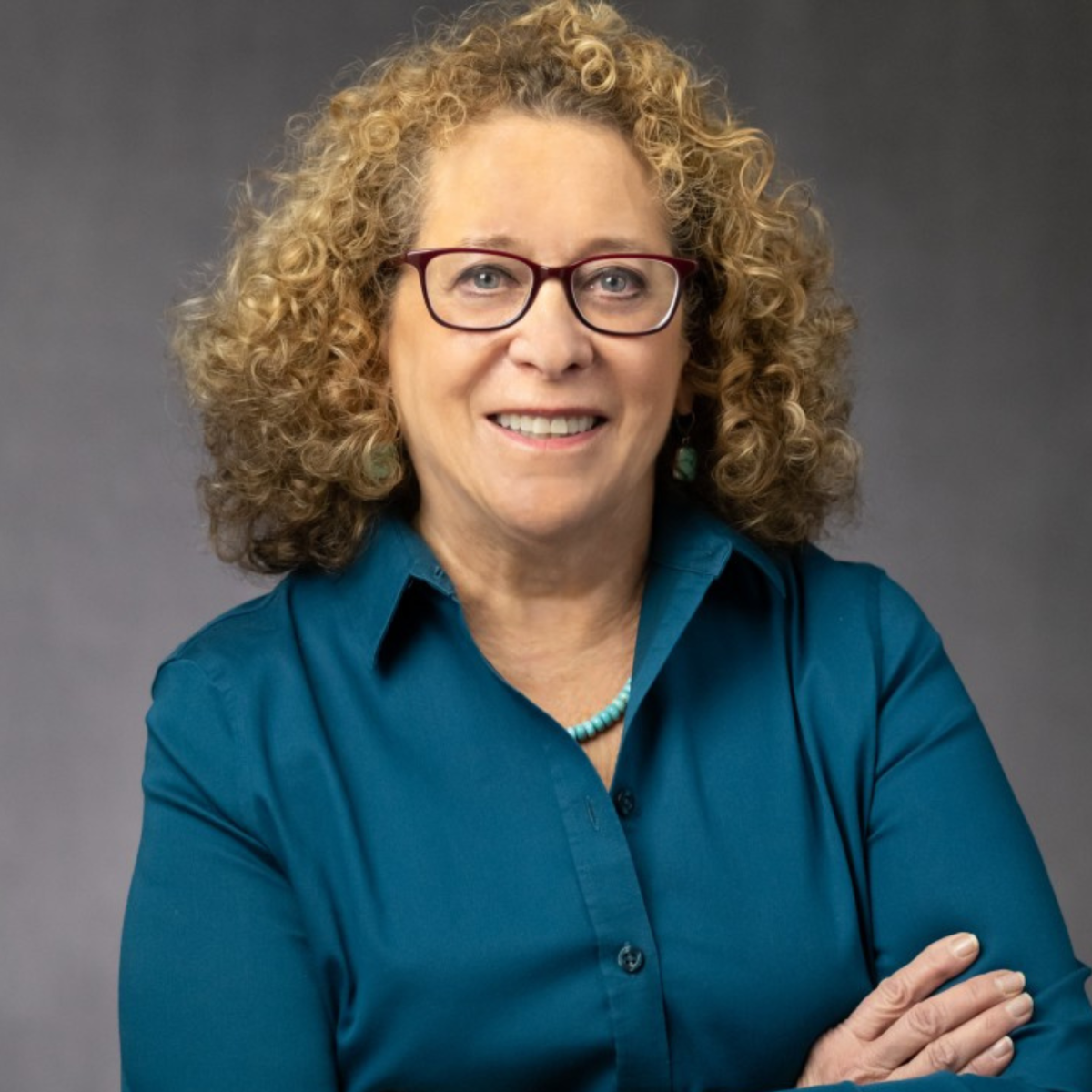

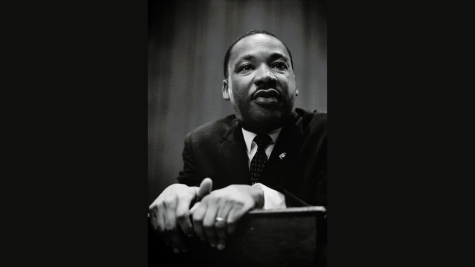
The Jewish Light didn’t arrive at this story by accident. We’ve been following Nina Gilden Seavey’s work for years, long before newly unsealed federal files, before congressional testimony resurfaced in headlines and before her recent essay in “Slate” drew national attention to a question that has lingered for decades: what the government may have known before the assassination of Martin Luther King Jr.
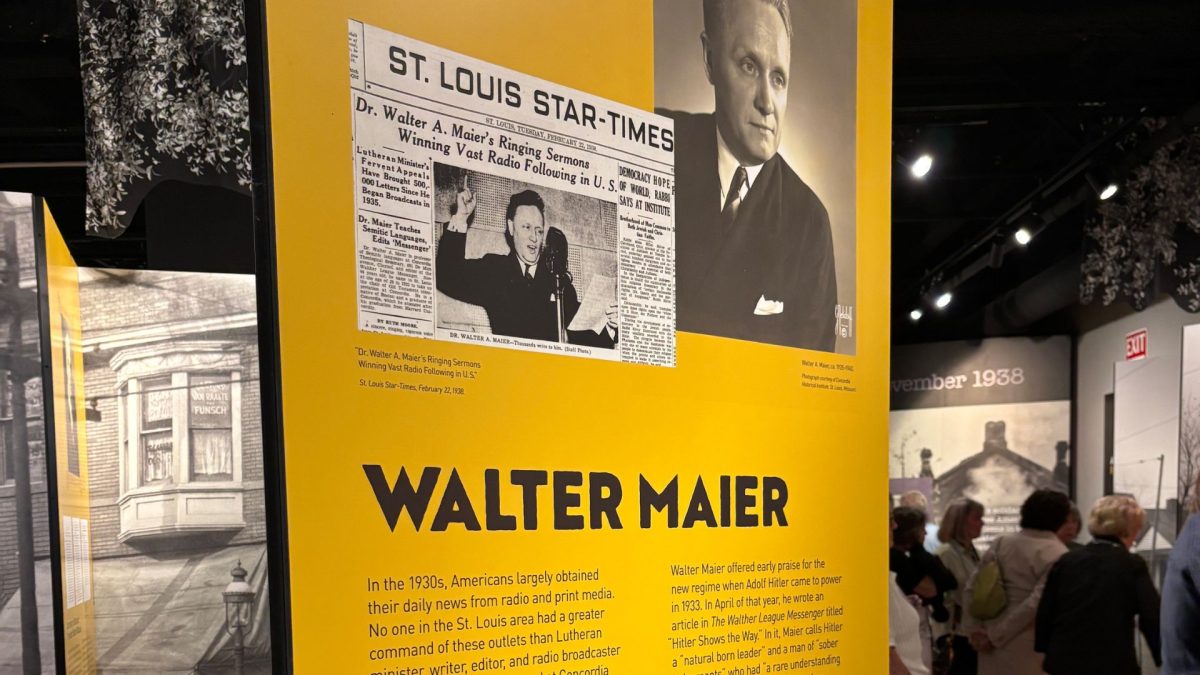
King’s ties to Jewish St. Louis were not abstract. He spoke to Jewish audiences here at critical moments in his career, including at United Hebrew and Temple Israel, forging relationships with local rabbis and communal leaders who supported his work. That history makes the unresolved questions surrounding St. Louis’ place in the story harder to dismiss as coincidence.
A St. Louis starting point
Seavey’s path into the MLK files began closer to home. Her 2021 podcast, “My Fugitive,” explored the life of her father, Louis Gilden, a Jewish civil rights attorney in St. Louis and his defense of antiwar protester Howard Mechanic, who disappeared underground for more than three decades.
As Seavey retraced that history, she uncovered a wider web of federal surveillance, informants and secrecy that extended well beyond Vietnam era protestors.
ADVERTISEMENT

That work eventually led her to the still unresolved questions surrounding King’s murder and back to St. Louis.
A final conversation
What changed during the summer of 2025 was renewed contact with a figure Seavey had been trying to reach for years.
Russell Byers had long occupied a central place in her research. In the late 1960s, Byers claimed he had been offered $50,000 to arrange the killing of King, an allegation later examined by the House Select Committee on Assassinations. For years, Seavey believed Byers was already dead. She had made repeated attempts to locate him during earlier research and eventually assumed the trail had gone cold.
That assumption proved wrong.
After Seavey’s recent work on the King assassination drew fresh public attention, including her “Slate” essay, a third party who knew Byers reached out and offered to connect them. Byers was elderly and in failing health but willing to talk.
Before his death earlier this year, Byers told Seavey something he had never said publicly before. He said he shared word of the bounty almost immediately after hearing it, not years later as he had testified to Congress.
“It wasn’t five years,” Seavey recalled him telling her. “It was five minutes.”
Seavey recorded a series of conversations with Byers in the final months of his life. What emerged was a disclosure that directly contradicted his sworn testimony.
What this changes — and what it doesn’t
“We know who killed King. It was James Earl Ray,” Seavey said. “The evidence was overwhelming at the scene and he pled guilty to the crime. There are no new smoking guns in this story.”
What has always troubled investigators and historians, she said, is not who pulled the trigger, but whether others helped Ray and why the FBI never conducted a full conspiracy investigation.
“That failure was a fateful abrogation of their criminal justice duties,” Seavey said.
According to Seavey, the FBI shut down that line of inquiry in 1968 to avoid exposing the scope of its illegal surveillance of King and other civil rights leaders under COINTELPRO. Any deeper investigation into Ray’s broader circle would have raised uncomfortable questions about what the bureau already knew.
Why St. Louis matters
Seavey has described the Byers bounty as the “most credible” explanation for how a conspiracy around Ray could have functioned.
“I say most credible because it was the only theory that withstood the deep, detailed analysis of the House Select Committee on Assassinations,” she said. “This was more than a theory. It was a carefully built case that is now stronger.”
The committee traced a direct line through St. Louis, from Byers to the Grapevine Tavern in Benton Park, owned by James Earl Ray’s brother and into a local network of segregationists, criminals and political extremists. While the committee found no definitive proof that Ray knew about the bounty, it concluded that the offer itself was real.
Byers’ late reversal raises an obvious question: why contradict sworn congressional testimony decades later?
“In 1978, Russell Byers had two goals in life, making money through criminal enterprises and staying out of jail,” Seavey said. “The best way to do that was to distance himself from the bounty.”
The unfinished record
The larger implication, Seavey argues, is institutional failure, not just in hindsight but by the standards of basic criminal procedure.
“In every criminal investigation there are always three lines of inquiry,” she said. “The shooter investigation. The fugitive investigation. And the conspiracy investigation.”
The FBI pursued the first two. It abandoned the third.
Seavey has called on the federal government to release tens of thousands of additional MLK related files, including closed door testimony and depositions from the House committee, so the full truth can be reexamined in light of this new information.
For Seavey and for St. Louis, the work isn’t finished. The material is still leading and once again, it’s leading back here.