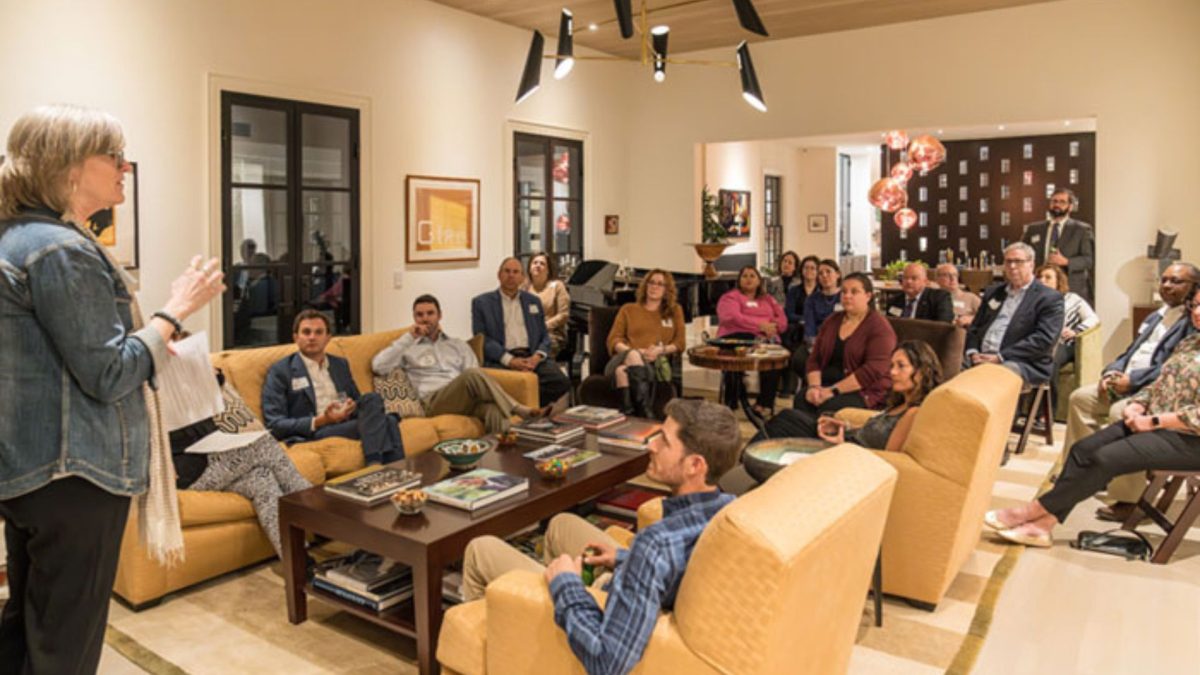

When a Jewish grief group at a St. Louis synagogue launched quietly in December, it was meant to last four weeks. It filled ip almost immediately. It resonated. And when the final session arrived, participants had a simple question: when do we start again?
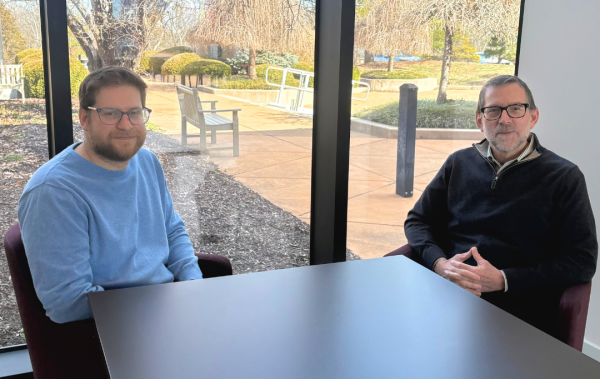
What began as a short-term pop-up at Congregation B’nai Amoona is now continuing through the year, meeting Tuesdays from 10 to 11 a.m. and open to the broader community at no cost. The group is co-facilitated by Rabbi Jared Skoff and licensed clinical social worker Jay Winig as part of the synagogue’s Hazak program for adults 60 and older, though anyone is welcome.
A low-barrier Jewish grief group in St. Louis
Unlike many support groups, this grief group is not limited to a specific type of loss. There is no requirement that attendees share the same timeline or relationship to the person they are mourning.
“We wanted a low barrier to entry — no cost, low commitment, open arms, no need to qualify that your grief ‘counts,’” Skoff said. “Once we started with a shared understanding that we are not all the same — not the same age, stage, loss, attendance level — people have immediately felt more comfortable, more open to connecting across difference and bonding through the shared experience of grief.”
When the final session of the original pop-up arrived, participants were not ready to let it end.
ADVERTISEMENT
“We got so many thank yous that said the exact same thing,” Skoff said. “This was the group that we really needed.”
For Sue Rich, the structure itself made that first step possible.
“It was described as an open group, facilitated by a licensed therapist and a rabbi. And it was at my shul, where I already feel comfortable,” Rich said. “I was looking for a safe community to process my grief through a Jewish lens.”
Shared identity without shared timelines
Winig is careful to distinguish between shared identity and the group’s purpose.
“The shared Jewish identity is the common thread but not the core issue of the group,” he said. “My job as a facilitator is to help the participants have a comforting place to work through their grief. I focus very little on the religious aspect, but it is often an unspoken or acknowledged common bond.”
He also pushes back on the stereotype that grief groups are defined by silence and tears.
“While it is perfectly acceptable to feel sad, cry and talk about your feelings, it is also a time to connect with other people, learn about community resources and events, and hear how people are coping who may be further along with their grief,” Winig said. “And finally … laughter. Yes, laughter is part of recovery. We do laugh hearing stories and experiences from each other.”
Rich said what she found inside the room surprised her.
“What I found was a safe place to process my grief and gain perspective from other people’s journeys,” she said. “I feel like I hit the jackpot with this group.”
Jewish tradition shaping grief support
For Skoff, who lost his mother this year, the work carries personal resonance, though he is deliberate about how he shows up.
“There are times when your friend wants to talk and as the mourner, you want them to listen. Or when they want to listen and you don’t want to talk,” he said. “The only thing you can do is try to assess, first and foremost, what the mourner needs in the moment.”
He draws on Jewish tradition to guide that sensitivity. In a shiva house, visitors traditionally wait for the mourner to speak first.
“Based on that tradition, and from my own experience, I hold back on sharing about my own loss unless one of the participants prompts me,” Skoff said.
He sees many participants circling back to rituals they may not have thought much about before.
“Shiva and Kaddish, these are things that Judaism really got right,” he said.
After shiva: Community that continues
The group’s flexibility is intentional. Participants attend weekly, monthly or simply when they feel ready. No one is required to speak. No one is asked to prove the legitimacy of their grief.
The grief group meets Tuesdays from 10 to 11 a.m. at B’nai Amoona, 324 S. Mason Road. There is no cost to attend. Those interested can contact the synagogue office at 314-576-9990 or email Rabbi Skoff or register online.
| RELATED: Let’s talk openly about grief