Antisemitic incidents in the United States declined in 2025, according to a new report from the Anti-Defamation League, but the drop comes with a complication: the violence didn’t follow.
The ADL’s annual Audit of Antisemitic Incidents recorded 6,274 cases nationwide last year, down 33% from 2024 but still far above pre-Oct. 7, 2023, levels. At the same time, physical assaults increased, including attacks involving deadly weapons and three killings tied to antisemitic violence.
In Missouri, the pattern feels familiar.
Incidents declined in 2025, but they remain elevated compared to where things stood before 2023. And nearly a year after one of the region’s most visible antisemitic crimes, a firebombing in Clayton, the case remains unsolved.
A decline that doesn’t feel like one
On paper, the numbers suggest progress. Harassment and vandalism both dropped significantly, driving the overall decline.
ADVERTISEMENT

But the category that carries the most weight, violence, moved in the opposite direction.
“Our 2025 audit, which shows it was one of the most violent years for American Jews on record, is a reminder of how dramatically the threat landscape has shifted,” said Jonathan Greenblatt, CEO of the Anti-Defamation League. “Numbers that would have shocked us five years ago are now our floor.”
That shift isn’t just showing up in national data. It’s being felt locally.
“The overall numbers matter because they show antisemitism remains far above anything we considered normal just a few years ago,” said Danny Cohn, president and CEO of the Jewish Federation of St. Louis. “But what is especially alarming is the increase in violent incidents. When antisemitism moves from hateful rhetoric and vandalism to physical violence, it changes how people experience daily life and how safe they feel, simply existing openly as Jews in America.”
The local reality in Missouri
In Missouri, the data mirrors that tension.
While total incidents declined, vandalism remained near record levels, with 35 cases reported statewide. And one of the most high-profile incidents from 2025 is still unresolved.
Nine months after multiple vehicles were set on fire in what authorities believe was an antisemitic attack in Clayton, no arrests have been made. A $57,000 reward remains in place for information leading to a conviction.
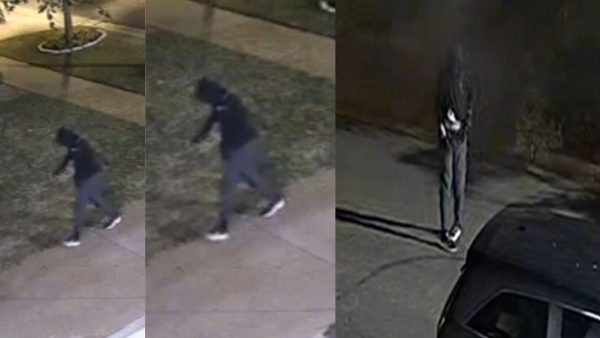
“Multiple cars burning on a quiet street overnight illuminate the seriousness of the situation our communities face,” said Jordan Kadosh, regional director for the ADL. “We remain as dedicated as we were on Aug. 5 to find those responsible and bring them to justice together with our community and law enforcement partners.”
The Clayton case isn’t an outlier. In recent months, antisemitic incidents across the region have surfaced in schools, neighborhoods and construction sites, including swastika graffiti at Affton schools that led to an arrest, vandalism at a Clayton elementary school and an incident in O’Fallon just hours before a national firebombing attack. The details vary. The pattern doesn’t.
The impact goes beyond the investigation itself.
“The Clayton firebombing had a deep emotional impact on our community because it brought home, in a very visible way, that antisemitism is not only something we read about in other cities,” Cohn said. “It is critically important that this incident be solved, both for public safety and for maintaining trust.”
Preparing for something different
For those focused on security, the shift isn’t abstract, it’s operational.
“While the overall number of incidents may fluctuate, the potential for violence remains a serious concern,” said Scott Biondo, community security director at the Federation. “We are seeing more individuals willing to act aggressively or violently, where in the past, they may not have crossed that line.”
That reality is changing how Jewish institutions prepare and how they think about everyday life.
“We must prepare for a wide range of scenarios while continuing to help community members feel confident and secure participating in Jewish life,” Biondo said.
Across the community, that preparation now touches nearly everything.
“Security is now embedded into almost every aspect of Jewish communal life in ways that would have seemed extraordinary not long ago,” Cohn said.
But even as that shifts, there’s a line local leaders are careful not to cross.
“The answer to antisemitism cannot be retreat,” he said. “Our responsibility is to create spaces where people feel proud, connected and able to participate fully in their Jewish community.”
Where incidents are happening
The report also tracks where antisemitism is showing up.
College campuses saw the steepest decline, with incidents dropping 66% after a surge of anti-Israel protests in 2024. Even so, campus incidents remain well above pre-2023 levels.
At K-12 schools, incidents held steady, driven largely by peer-to-peer behavior, including bullying and vandalism.
Across all settings, incidents tied to Israel or Zionism accounted for 45% of cases in 2025, down from 58% the year before but still far higher than in previous years.
The people behind the numbers
For the ADL, the data only tells part of the story.
“Behind every one of these incidents is a real person, a family threatened at their synagogue, a rabbi attacked on the street, a student harassed on campus,” said Oren Segal, senior vice president of counter-extremism at the ADL.
Locally, that reality is shaping how security is approached, not as a single fix, but as a system.
“There is no one measure that makes people safer,” Biondo said. “It’s a coordinated, multi-layered approach, security, awareness, training, communication and strong partnerships. Everyone has a role to play.”