

St. Louis Diaspora is a Jewish Light series about people who started in St. Louis and went on to do interesting things elsewhere and the hometown that helped shape them.
From St. Louis to The Met — and back again
There’s a certain kind of kid who gets dragged to museums on family trips and spends most of the time wishing they were somewhere else.
Elana Kaplan wasn’t that kid. At least not for long.
“I always remember loving history,” Kaplan said. “My dad was a history major, so we had a lot of history books in the house.”
She grew up in University City, on Cornell Avenue, in a home where curiosity wasn’t just encouraged, it was the family routine. Family road trips often included stops at museums and historical sites and weekends meant visits to the Saint Louis Art Museum.
“At a certain age, I just started really enjoying it,” she said.
Kaplan attended Epstein Hebrew Academy before going on to Block Yeshiva High School. It was an upbringing shaped by a Jewish community that crossed denominational lines — Reform, Conservative and Orthodox — and a home where her parents regularly hosted guests from across that spectrum.
“I felt like I really grew up part of a very wide Jewish community,” she said.
That mix of intellectual curiosity and communal life would shape what came next, even if Kaplan didn’t realize it at the time.
Finding her place in history
Kaplan went on to Barnard College in New York City, where she continued to pursue her interest in history. But she quickly realized the traditional paths, classroom teaching or academia, didn’t quite fit.
“I knew I didn’t want to be in a classroom,” she said. “And I didn’t want to be a professor.”
Instead, she found her way to museum education, a field that allowed her to combine history, storytelling and human connection.
“It’s using artifacts… to teach,” she said. “It’s very much about asking people, ‘What do you see? What do you think? How do you feel?’”
That approach would define her career for the next 25 years at the Metropolitan Museum of Art in New York, one of the world’s leading museums, where she worked with thousands of visitors from students to lifelong learners, helping them engage with history not as something distant, but something personal.
“You’re not just giving information,” she said. “You’re helping people find their own way into it.”
Kaplan said her work often focuses on connecting ancient artifacts to Jewish history, bringing Jewish texts and traditions to life in ways that feel immediate and accessible.
Teaching beyond the classroom
Over time, Kaplan’s work expanded beyond traditional museum tours. One of the most meaningful directions came from a deeply personal place.
As her grandmother experienced Alzheimer’s disease, Kaplan began thinking about how museums could better serve people with dementia.
“I always felt like she was such a smart person,” Kaplan said. “And there were not quality programs… for people with dementia.”
That realization led her to develop programs designed to engage individuals facing cognitive decline, using art and artifacts as tools for connection, memory and dignity.
“It’s not about testing memory,” she said. “It’s about creating moments where people can still respond, still connect, still feel something.”
It was a shift that reflected her broader philosophy, that history isn’t just something to learn, but something to experience.
A return shaped by distance
Like many in the museum world, Kaplan saw her career disrupted during the COVID-19 pandemic. With institutions closed, she began developing virtual programming, a pivot that unexpectedly brought her back into closer contact with St. Louis.
What started as adaptation became reconnection.
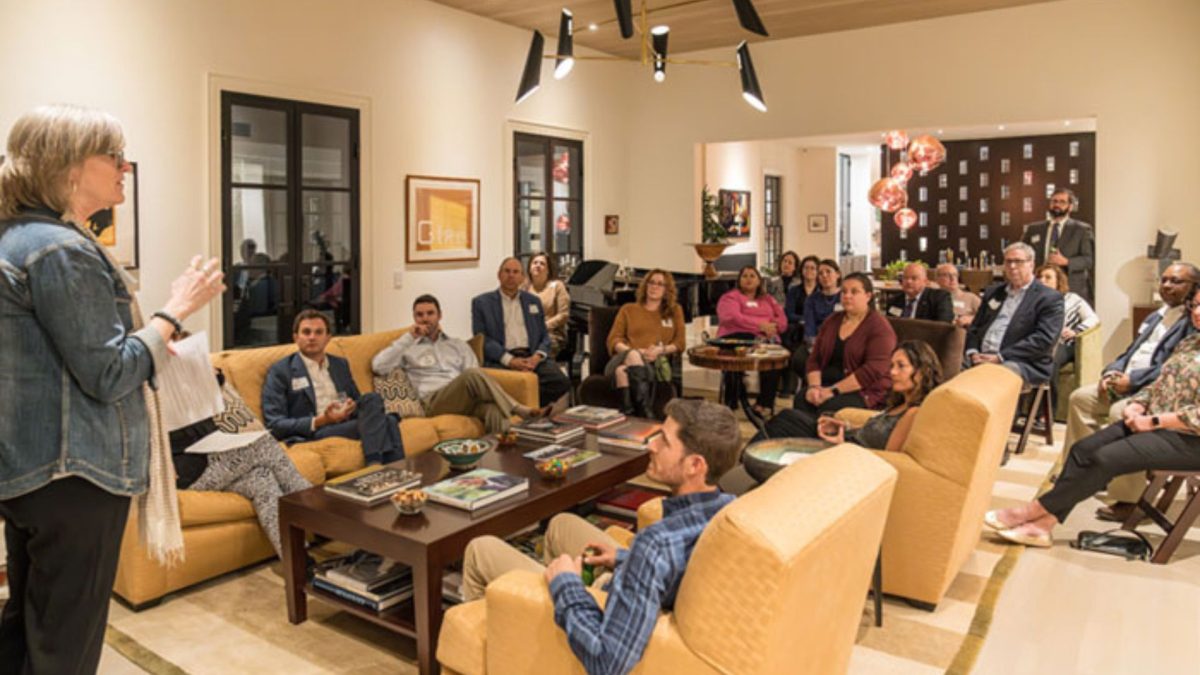
In recent years, she has led a steady stream of virtual and in-person programs for St. Louis audiences, including through the Mirowitz Center, bringing the same approach she developed over decades, using art and history to spark conversation and reflection.
Still St. Louis
For Kaplan, St. Louis isn’t just where she started. It’s something she continues to carry, in her work, her identity and the way she sees the world.
“I’m really, really proud of my St. Louis roots,” she said. “And I talk about St. Louis all the time.”
She’s found that connection travels.
“Whenever you say that, somebody will either know someone from St. Louis…” she said.
What started in St. Louis, a love of history, a strong Jewish education and a wide community, eventually took her to one of the world’s leading museums.
Now, she’s bringing that same approach back home.
About the St. Louis Diaspora series
St. Louis has been quietly sending people like Kaplan into the world for generations. The Jewish Light plans to find more of them. Know someone who belongs in the St. Louis Diaspora series? Send suggestions to Jordan Palmer at [email protected].
| RELATED: From Creve Coeur to MetLife Stadium: How a school bus stop changed Jill Hirsch’s career