
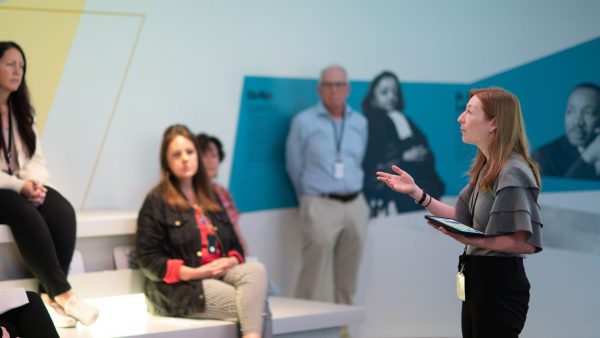
When Helen Turner began teaching about the Holocaust in 2011, many students still had a personal connection to World War II.
Some had met a Holocaust survivor. Others knew a World War II veteran. The Holocaust was moving into history, but it was still, in many ways, within living memory.
Today, that connection is fading.
“As Survivors and WWII vets have passed away, our touchstones of community memory and exposure have diminished,” said Turner, director of education at the St. Louis Kaplan Feldman Holocaust Museum.
For Holocaust educators, that shift has changed more than who can share firsthand testimony. It’s changing how the Holocaust is taught.
ADVERTISEMENT

Preparing for a new era
That challenge was one of the themes Turner explored after being selected as one of 24 educators nationwide for the Jewish Foundation for the Righteous’ Alfred Lerner Fellowship, a five-day program examining the future of Holocaust education.
“Holocaust education is changing and needs to change to meet the needs of today’s students,” Turner said. “The assumptions of knowledge and context have to keep up with the times. Where we were in the 1990s, when so many Holocaust museums were built, is not the same as 2026.”
For Turner, one reason is clear: Today’s students are growing up without those firsthand connections.
Meeting students where they are
Technology has also reshaped how younger generations understand the past.
“There was an understanding of the challenges of travel and communication without technology,” Turner said of earlier audiences. “Today, technology serves as a native language for so many of our visitors, so the concept of not being able to Google search or stay in constant contact is a hurdle for some of our visitors.”
Rather than viewing those differences as obstacles, Turner sees them as opportunities.
“It’s created an opportunity to create new touchstones, work with new examples and get creative with connecting with our audiences of all ages,” she said. “Having been reimagined for a post-2020 audience, we are better equipped to meet visitors where they are and with what resonates with them.”
Broadening the story
She said many visitors arrive knowing the Holocaust primarily as a story of Jewish persecution. While Jews remain at the center of that history, the museum also explores the persecution of many other groups targeted by the Nazi regime.
“The Museum has worked to show the scope and scale of Nazi persecution towards a multitude of other groups,” Turner said. “This is often a surprise to our visitors and provides a gateway to welcome them into this history, particularly if they see connections to themselves.”
“I think all of our visitors come with a variety of perspectives and questions, which is exactly what we want,” she said. “Social media is certainly playing a role in everyone’s, students’ and adults’, understandings of antisemitism which can, again, be a good gateway into a conversation.”
Lessons from the fellowship
The fellowship also provided practical ideas Turner plans to bring back to St. Louis.
One session on Nazi policing and the Einsatzgruppen, the mobile killing squads responsible for mass murder across Eastern Europe, resonated because of the museum’s Law Enforcement and Society Program, which trains Missouri law enforcement officers in partnership with the United States Holocaust Memorial Museum and the Anti-Defamation League.
Another highlight was an in-depth workshop led by educator Paul Salmons, who served on the curatorial team that helped create the St. Louis Kaplan Feldman Holocaust Museum.
Turner said Salmons reinforced a student-centered teaching approach that encourages visitors to engage directly with historical artifacts and develop their own understanding through guided discussion.
Looking ahead
As the Holocaust moves further from living memory, Turner believes educators must continue finding new ways to make one of history’s darkest chapters meaningful for generations who can no longer learn it from those who lived through it.
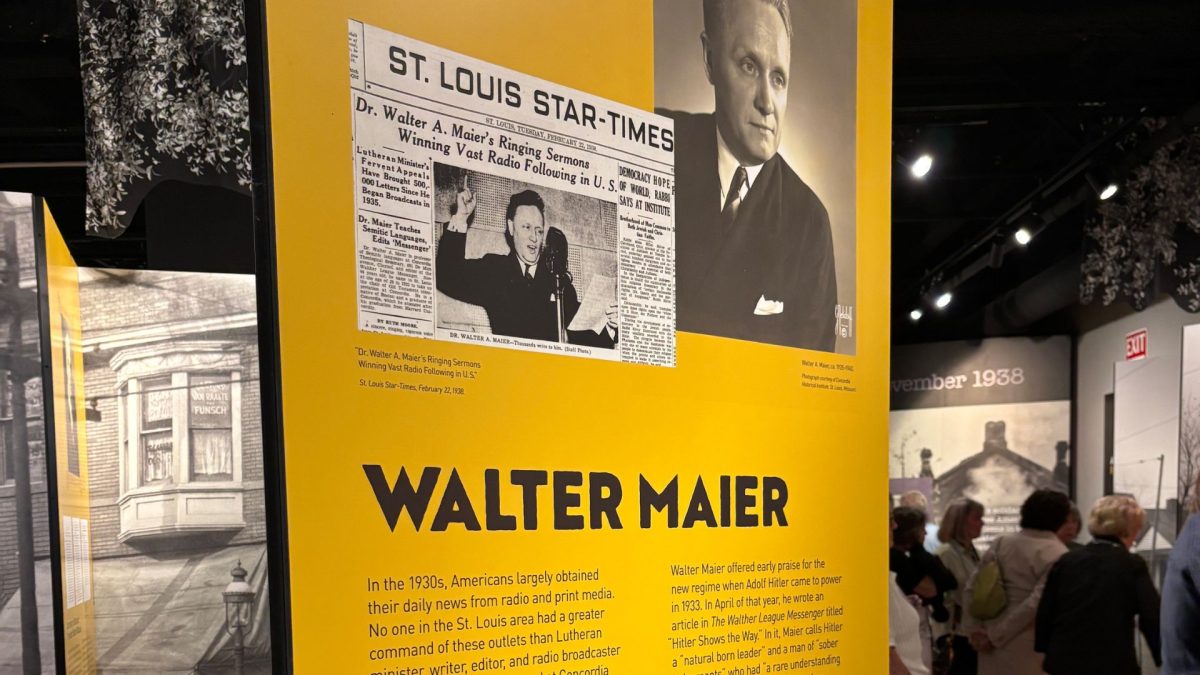
| RELATED: A prominent St. Louis minister praised Hitler in 1933. Six years later, he changed his mind.