
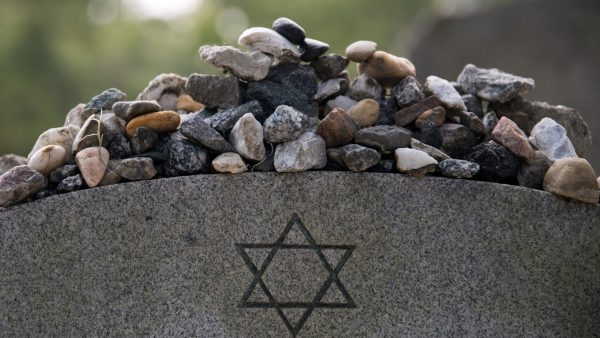
When Rabbi Ze’ev Smason learned that more than half of American Jews are now choosing cremation rather than traditional burial, he was stunned.
The statistic caught him off guard not because cremation rates have been rising across American society, but because Jewish burial had long been one of those traditions that seemed almost universal across denominations and levels of observance.
“It was astonishing to me that more than 50% of Jews are being cremated,” said Smason, rabbi emeritus of Nusach Hari B’nai Zion. “Thirty years ago, it would have been inconceivable for a Jew, regardless of denomination or level of observance, to have considered such a thing.”
That realization led Smason and a group of supporters to launch the St. Louis Jewish Burial Foundation, a volunteer-led organization dedicated to educating Jewish families about traditional burial practices and encouraging conversations about end-of-life planning.
Educating families before a crisis
The foundation’s mission is straightforward: provide information, answer questions and help people better understand Jewish burial traditions before those decisions become urgent.
ADVERTISEMENT

“We seek to educate and inform the broader St. Louis Jewish community about the importance and value of Jewish burial,” Smason said.
For Smason, burial is not simply a custom. He sees it as one of Judaism’s oldest and most enduring practices.
He points to the Book of Genesis, where Abraham purchases a burial place for Sarah, as one of many examples woven throughout Jewish history and tradition.
“Burial was just accepted as something Jews do,” he said.
At the same time, he recognizes that many Jewish families today have never had detailed conversations about burial wishes, funeral planning or end-of-life traditions.
“No one wants to think about mortality,” Smason said. “But there’s no one who gets out of here alive.”
That reality is one reason the foundation encourages families to discuss these issues before a health crisis forces difficult decisions.
Just as families talk about finances, wills and medical directives, Smason believes conversations about burial wishes should happen earlier rather than later.
Resources and community education
To help support those discussions, the foundation offers a variety of educational resources.
One of its primary tools is a booklet called “Last Kindness,” which explores Jewish perspectives on burial and cremation and answers common questions families may have. The guide is available through the organization’s website and in print.
The foundation also sponsors educational programs and presentations for synagogues, community groups, assisted living communities and other organizations interested in learning more about Jewish burial traditions.
Questions about green burial
Among the questions Smason hears most frequently are those involving environmentally friendly burial options.
He notes that many people are surprised to learn that traditional Jewish burial shares many characteristics with what is commonly called green burial. Traditional Jewish burial avoids embalming and emphasizes simple biodegradable materials that allow the body to return naturally to the earth.
For Smason, however, the foundation’s work is ultimately about helping families understand the values and traditions behind those decisions.
A conversation he never forgot
One experience remains especially meaningful to him.
A concerned relative once contacted him about a woman nearing the end of her life. The woman’s daughter had become convinced that cremation was the best option. Rather than debate the issue, Smason agreed to visit.
During the visit, he asked the woman if she would like to recite the Shema, one of Judaism’s central prayers. Although she had been speaking only in brief responses, she unexpectedly recited the prayer along with him, word for word.
The moment had a profound impact on her daughter.
The next day, Smason said, the daughter called and told him she now better understood how important Judaism and Jewish tradition had been to her mother. The family ultimately chose a traditional burial.
Continuing the conversation
For Smason, the experience reinforced the importance of education and conversation.
“We’re here to educate and to inform,” he said. “We welcome any questions somebody might have about Jewish burial.”
More information about the St. Louis Jewish Burial Foundation, including educational resources and upcoming programs, can be found at STLBurial.org.