
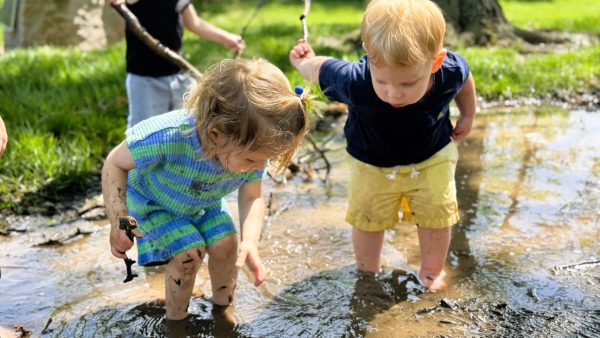
Let’s set the scene. A parent dumping a pile of dirt, mulch and who-knows-what out of their kid’s shoes before getting in the car.
That’s likely what a lot of parents do during pickup at Shirlee Green Preschool, and for good reason.
Their kids spend a lot of time in the dirt. Turns out, that’s time well spent. Shirlee Green Preschool, the early childhood program at Congregation Shaare Emeth, has been named a 2026 National Green Ribbon School honoree, placing it among a small group of schools nationwide recognized for leadership in sustainability, student health and environmental education.
It’s a step beyond where the school was just a year ago. Earlier this year, Shirlee Green was designated a Missouri Green School. Now, it’s one of just a handful of Jewish schools in the country, and the only one in Missouri, to receive the national honor.
ADVERTISEMENT

But the award doesn’t really explain the place.
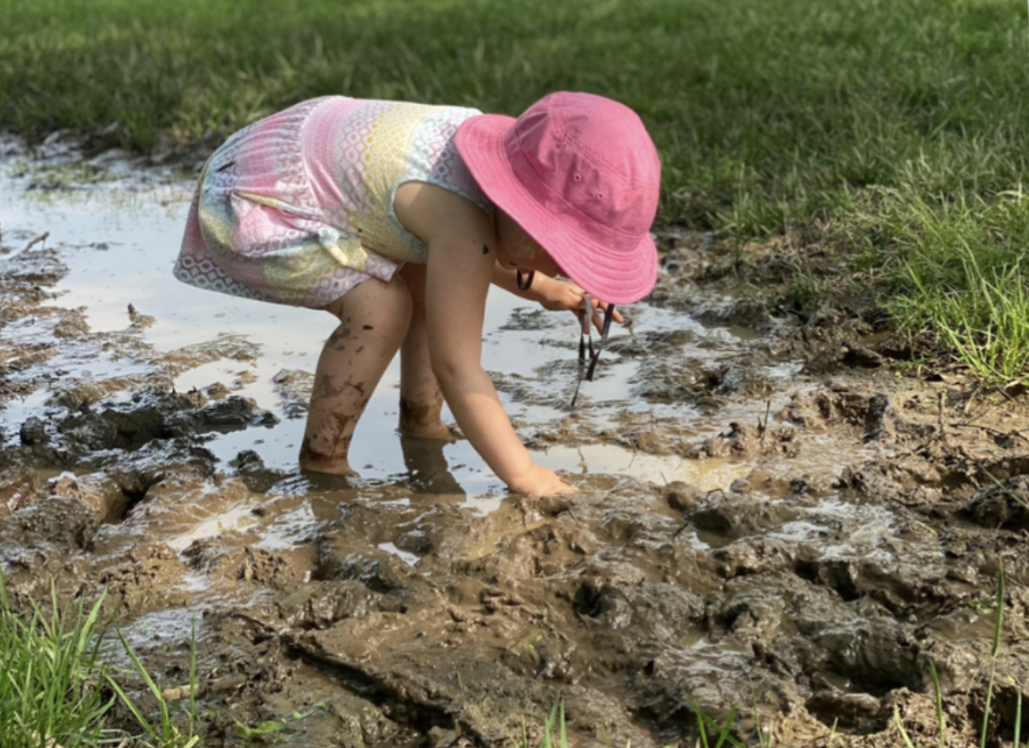
Most preschools try to keep kids clean. This one doesn’t.
A different kind of preschool
To better understand, picture a hallway full of toddlers in diapers and rain boots, soaked, muddy and completely unbothered.
“Last year, a family arrived to Shirlee Green Preschool to tour our school,” director Brandi Kanoya said. “It had just stopped raining. As they walked through the front door, a gaggle of 2-year-olds plodded down the hall—only diapers and soggy rainboots on. They were soaked and muddy and smiling.”
On another day, it’s kids in neon yellow vests hauling compost.
Composting club, worm club—and real work
Students ages 3 to 5 can join “Composting Club,” collecting food scraps from classrooms and wheeling them out to a large compost bin at the front of the school. The material is picked up monthly and used to fertilize gardens around the region.
Inside, another group manages the worm bin.
“Worm Club” students keep the school’s vermicomposting system alive by feeding worms, adding paper scraps and making sure the environment stays just damp enough. It’s part science lesson, part responsibility and, apparently, part preschool normal.
That hands-on approach has led to real results. In 2025, the school diverted more than 5,000 pounds of food waste from landfills. Paper towels have been eliminated, more than 30% of supplies are repurposed materials and traditional drinking fountains have been replaced with filtered bottle-filling stations.
What parents see at pickup
Still, for families, the impact shows up in smaller ways.
If that opening scene felt oddly specific, it is.
“My 4-year-old son loves playing outside, and I love that his teachers encourage him to play hard and get dirty,” said parent Emily Cohen. “When I pick him up, it has become tradition to dump his shoes out before he gets in the car because every day, we pour out a huge pile of dirt and mulch and sand and who knows what else.”
Another parent, Sarah Weber, said her daughter doesn’t just tolerate the mess. She goes looking for it.
“Anaelle not only loves the dirt and rain but actively seeks out these rich sensory experiences—digging, scooping and fully embracing the mess,” Weber said.
Building habits early
For teachers, the goal isn’t just environmental awareness. It’s habit.
“Teaching at a green ribbon preschool means that our students are fundamentally aware of their impact on their environment,” said teacher Amy DeBrecht. “As young as 2 and 3 years old they have begun to understand that paper towels are wasteful and that having a worm farm helps our veggies grow really big.”
The idea is simple.
Start early. Make it real. Let kids get dirty enough that they remember it.
More than an award
“I love the surprise of playing in the rain,” Kanoya said. “As they get soggy and muddy, the squelches from their boots get sloppier, their giggles get louder, and they find that it’s the best day ever.”
Which is maybe the clearest explanation of the school’s success.
Not the award. Not the metrics.
Just a bunch of kids, covered in mud, convinced they’ve figured something out the rest of us forgot — or maybe never learned in the first place.