
Earlier this month, I wrapped up my most recent appearance at the Mirowitz Center, part of my quarterly comedy series, “Why Jewish Humor is so Funny.” That session focused on the writers’ room of “Your Show of Shows,” the legendary 1950s sketch program that helped define American comedy. As the conversation unfolded, we kept circling back to the genius of Sid Caesar. So much so that, by the end of the night, I announced our first session of 2026 would be devoted entirely to him.
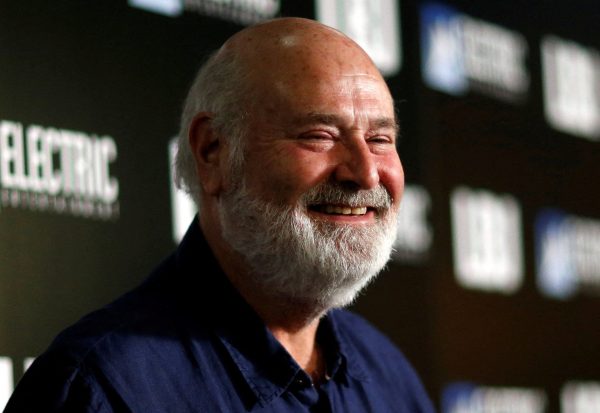
That plan has since changed, following the shocking death of Rob Reiner.
In the days after, as tributes poured in and conversations inevitably drifted in directions I had no interest in following, I found myself retreating to something simpler and far more personal: Rob Reiner’s work, and the very specific ways it has lived in my memory for decades.
This isn’t a list of Reiner’s best movies. That list already exists — several times over. This is something else. These are the moments when his work made me react out loud. Sometimes that reaction was laughter. Sometimes it was shock. Sometimes it was the same involuntary jolt laughter produces, even when nothing remotely funny was happening.
Being funny is one thing. Making someone actually respond — physically, involuntarily — is something else entirely.
Here are the moments when Rob Reiner did exactly that to me.
The first laugh
(“All in the Family,” 1971–79)
My first Rob Reiner memory came when I was a kid, probably somewhere between ages 6 and 8, sitting on the floor of my grandfather’s house in Kansas City. My grandfather, Baba (who readers now know as my Zayde) loved “All in the Family.” My brother and I would park ourselves on the carpet in front of his orangish recliner, watching a bulky 1970s television housed in a wooden case.
Reiner played Mike Stivic, Archie Bunker’s idealistic son-in-law, and in one episode the argument turns to the proper way to get dressed. Mike insists the correct order is sock, shoe, sock, shoe. Archie Bunker, played by Carroll O’Connor, argues just as confidently for sock, sock, shoe, shoe.
In our house, it wasn’t a joke. It was a lesson. A sitcom gag became family doctrine, and now — and I’m not kidding — every time I put on my socks and shoes, I think of my Baba showing me how to do it.
Laughing out loud
(“The Sure Thing,” 1985)
In “The Sure Thing,” directed by Reiner and starring John Cusack and Daphne Zuniga, the two characters find themselves hitchhiking cross-country while pretending to be a married couple expecting a baby, a ruse meant to make them seem safer to passing drivers.
At one point, Cusack’s character launches into a rapid-fire monologue about their unborn child’s possible name: Nick.
“Nick’s the kind of guy you can trust. The kind of guy you can drink a beer with. The kind of guy who doesn’t mind if you puke in his car. Nick’s your buddy. Nick’s your pal.”
This was the first Reiner moment that made me truly laugh out loud. I stole the line when I went to college, swapping in whatever name fit the moment. What I didn’t realize at the time was that everyone else was stealing it too, dropping it into dorm rooms, parties and late-night conversations, like a shared language you didn’t need to explain.
The famous line
(“When Harry Met Sally…,” 1989)
Then there is the scene at Katz’s Delicatessen, when Meg Ryan’s Sally launches into an extended, very public demonstration of pleasure at the table while Billy Crystal’s Harry watches in equal parts confusion and disbelief. The room grows quiet. Diners stare. You can feel the secondhand discomfort building with every second that passes.
And then a woman, (Reiner’s mother, Estelle) at the next table cuts through it all with a single, perfect line: “I’ll have what she’s having.”
Everyone knows it. Everyone remembers it. And yet it still works. It’s one of those rare moments where the uncomfortableness created hasn’t ever stopped being funny.
Funny by existing
(“When Harry Met Sally…,” 1989)
Harry Burns again. Some characters are funny because of what they do. Crystal’s Harry Burns is funny because he exists. The neurosis. The cadence. The worldview. He’s a walking punchline.
But if there’s a single line that still makes me laugh out loud, it’s the quiet moment in the art museum, when Crystal suddenly shifts his voice and politely declares, “But I would be proud to partake of your pecan pie.” The timing, the unnecessary formality, the total commitment to the bit. It still kills.
Jewish rhythm
(“The Princess Bride,” 1987)
Crystal and Carol Kane appear briefly as Miracle Max and his wife. They don’t announce anything. They don’t have to. As the scene ends, Crystal says “Have fun storming the castle,” in his spot on Yiddishish accent. The Yiddish-inflected rhythm, the complaining, the bickering, the timing — it’s Jewish humor without labels, exactly the way Reiner’s comic genius father Carl Reiner believed it should be.
Broken expectation
(“The Princess Bride,” 1987)
Another moment from the same film: the elegant sword fight between Mandy Patinkin’s Inigo Montoya and Count Rugen, played by Christopher Guest.
The duel builds with classical precision, and then Guest suddenly turns and runs away. Comedy through broken expectation, delivered with perfect confidence.
Physical reaction
(“Misery,” 1990)
Most people remember actress Kathy Bates and her sledgehammer. I remember the movie’s end. James Caan, sitting in a restaurant with his agent, suddenly thinks he sees Bates’ character as a waitress. It’s not funny, and yet the reaction is physical. Relief, dread, memory all colliding at once.
Timing over jokes
(“A Few Good Men,” 1992)
Maybe it was the timing. Maybe it was the delivery. But I can’t recall another single word stopping my brain the way Tom Cruise did when he responded, cleanly and perfectly, “Crystal,” after Jack Nicholson’s Colonel Jessup bellowed, “Are we clear?” from the witness stand.
Not a joke. Not even close. But the same involuntary reaction hit. Reiner understood that sometimes the smallest moment, placed exactly right, lands the hardest.
The last word
(“A Few Good Men,” 1992)
The film’s final beat comes moments later. After the verdict, Lance Corporal Harold Dawson, played by Wolfgang Bodison, explains why he and his fellow Marine felt bound by loyalty and honor.
Lt. Daniel Kaffee, played by Tom Cruise, responds quietly: “You don’t need to wear a patch on your arm to have honor.”
Dawson pauses, then snaps to attention. He salutes and calls out, “Ten-hut! There’s an officer on deck!”
Chills.
Final thoughts
Rob Reiner didn’t just make comedies. He made moments that lodged in your noggin. Moments that followed you from childhood to college to adulthood. Moments that taught you when to laugh, when to sit up straighter and when to simply let something land.
And somewhere, I like to think, Carl and Rob Reiner are still doing what they always did best, breaking rhythm, trading lines and making the room lighter than it was before.