
On stage, Andy Gross merges stand-up comedy, mind-bending magic and remarkable ventriloquism. But long before the viral videos and touring life, Gross was known locally for something else — he was one of the brightest racquetball talents to come out of St. Louis. If his name sounds familiar, it might be because you remember him as a young, rising athletic superstar and part of the last chapter of what was “Racquetball’s very Jewish St. Louis story” in the mid-1980s. And now, decades later, he’s been inducted into the Missouri Racquetball Hall of Fame.
Andy Gross, Superstar
Gross, 55, grew up in St. Louis. As a young boy, he had two interests that would later define him: the magic of illusion and racquetball.
“I remember seeing the movie ‘Magic’ starring Anthony Hopkins and Ann Margaret. The film is about a deranged ventriloquist whose dummy comes to life,” said Gross. “I was hooked and began reading anything I could to uncover how to throw my voice.”
At the same time, Gross also spent his time chasing his older brother David to the racquetball courts at the Jewish Community Center.
“Racquetball was so popular and there was a group of kids up there that would play as much as possible,” remembered Gross, who now lives in Los Angeles. “There was only one court, court 5, that they would let young kids play on, so our parents would have to get up early to reserve the court so we could play on weekends. By the time I was 8-9 years old, I remember, you know, playing pretty good.”
One day, around that time, Gross says he was alone on the court hitting balls with a new racket when an older boy asked if he could see it.
ADVERTISEMENT

“He was probably 18 and he just started hitting the ball so hard. I thought for sure this guy was going break my new racket,” said Gross. “That was the first time I met Marty Hogan.”
For Gross, the encounter with Marty Hogan, who was the face of the sport, ignited his passion for the game. He soon became a force to be reckoned with, making history as the youngest player to qualify for the professional tour at the age of 15 and changing the course of his young life.
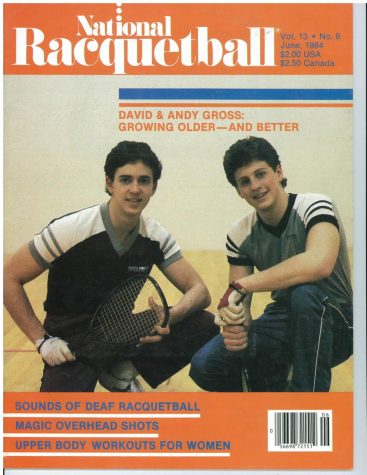
Life in California
After graduating from Parkway Central High School, Gross followed Hogan out to California to continue his professional racquetball career. It was the time of his life.
“I mean, there were tons of tournaments out here. I’m doing all these endorsements. We’re doing clinics and exhibitions and seeing the world. I was great. Everything was great,” said Gross. “And then when I was about 24, racquetball as a sport started struggling.”
By 1994, Gross’ professional career ended. He soon began wondering what to do next.
“It was a little scary. I didn’t go to college because I was doing so great with racquetball,” said Gross. “So now I’m in California, the sports dead and I go, ‘What the hell am I going to do now?’ Wait a second, I got this ventriloquism thing.”
That ventriloquism thing
So, that is just what he did. Gross rediscovered his skills and began signing up for open mic nights to hone his act.
“I learned my magic was good, but it wasn’t that funny,” said Gross. “I worked on it — made the act funnier and you know what? They kept having me come back and then all of a sudden I was becoming come middle act and then headlining.”
Now, with a career spanning over three decades, he’s never looked back. His viral videos, including the infamous “split man” prank, have garnered millions of views, propelling him to internet stardom and attracting the attention of celebrities like Snoop Dogg.
Coming full circle
Now, with his induction into the Missouri Racquetball Hall of Fame, Gross’ life has come full circle.
“Racquetball completely shaped my life,” Gross said. “I grew up on Missouri courts, traveling to tournaments, learning how to compete and how to perform under pressure. To be recognized back home after all these years means a lot to me.”
He also credits the sport with helping him transition into entertainment. “Walking into a comedy club or theater now feels a lot like walking onto the court used to,” he said. “You have to read the room, adjust on the fly and give people something they’ll remember.”
For Gross, the honor ties together both halves of a life defined by performance — whether on a court or on a stage.