
(Vincent Carchietta-Imagn Images)
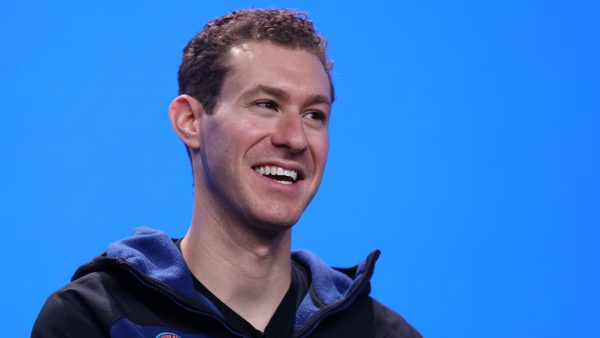
As two-time Olympic figure skater Jason Brown competes in St. Louis this weekend, with his sights set on making the U.S. Olympic team for a third time and earning a spot in Milan, the stakes are high. Yet for the Olympic medalist, the moment also underscores a balance he has long maintained—between the demands of elite competition and a deeply rooted Jewish identity.
| RELATED: From sportsmanship to the rink: A Jewish voice behind St. Louis’ biggest skating event
Brown is keenly aware of what it means to compete on the world’s biggest stage as a Jewish Olympian.
“First and foremost, it means so much,” Brown shared. “It’s not in any way an afterthought.”
That awareness comes with a sense of responsibility, particularly when it comes to visibility for young Jewish athletes. Brown emphasized the importance of representation and the power of “having someone to look up to that you can relate to and that might have a similar background.”
“For me, having that chance to be one of those Jewish athletes that this next generation of kids can look up to and see like, ‘Oh, he did it. He can do it, so can I,’” Brown said. “That means the world to me.”
While his commitment to figure skating began in childhood, taking skating lessons at just 3 years old, his Judaism was never pushed aside. Like many others in his hometown of Highland Park, Ill., Brown attended Jewish sleepaway camp OSRUI in Wisconsin and became a bar mitzvah. His Jewish identity has remained a constant throughout his career, including skating to the score of “Schindler’s List” at the 2022 Beijing Olympics.
For the 31-year-old, balancing school, family, skating and Jewish life was a lesson learned early.
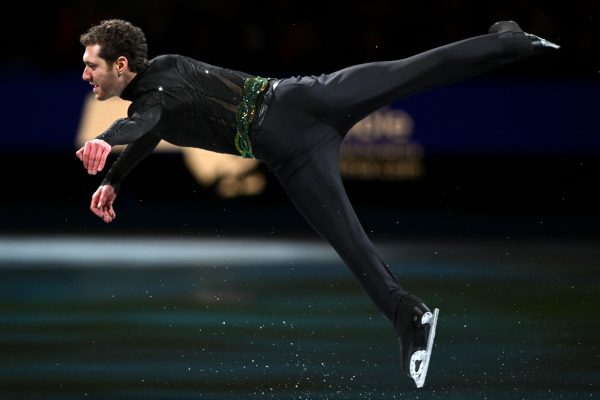
“My parents said, ‘What are the different parts of you that you really want to explore?’ And then we made time for them all,” he explained. “We would sit down at the beginning of the year like, ‘Hey, we’re dedicating X amount of time to Hebrew school, to bar mitzvah studies, to summer camp.’ Then, of course, skating—I’d sit down with my coaches and they’d be like, ‘OK, let’s fill in the blanks.’”
Skating was always the priority, but not at the expense of the rest of his life.
“You have these sections of my life that were basically non-negotiables. Skating fit into all the extra time that we possibly could,” Brown said.
That balance was made possible by strong family support.
“I had really, really supportive parents where they said, any of that additional time, we’re here to support you any possible way,” he said. “‘You want to go train somewhere else for the week with your coach when you have that week off? Great. We’ll help you get there. You want to go before school? If you wake us up, we’ll be there.’”
That foundation helped Brown rise quickly through the sport, becoming one of the youngest male Olympic medalists when he helped Team USA win bronze at his first Olympic Games in Sochi, Russia, at just 19 years old.
“I think it was just making sure that I continued to be well-rounded and really cultivate and nourish those other sides of who I was, as both the person within and outside of the rink,” he continued. “It’s really easy in sports to get so hyper-focused and so fixated on a task at hand that you kind of have this all-or-nothing mentality.”
Now, as he continues his competitive journey — competing in what could potentially be the final Olympic trials of his career — St. Louis feels like familiar territory. Brown, who began skating with the Skokie Valley Skating Club, spent much of his childhood competing across the Midwest, including frequent trips to St. Louis-area rinks.
“Growing up, I competed all over the Midwest. We did so many road trips,” Brown said. “My parents drove down from Chicago to be here, and we did that drive so many times as a kid. It was so sweet to see them in the stands today. I love being back. It feels, in a lot of ways, like a second home.”
As Brown looks ahead, his message to young Jewish athletes is rooted in the same balance he learned growing up:
“You can embrace that side of yourself,” he added, “and you can also strive to achieve anything you want.”