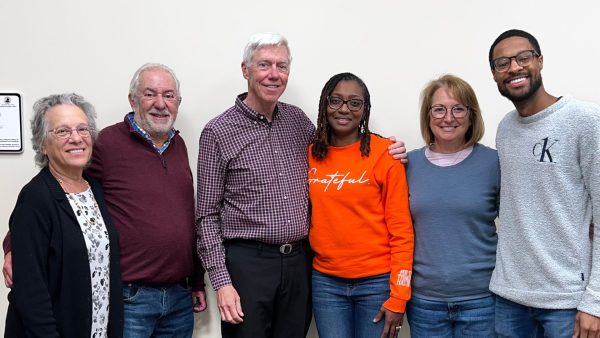
In 2011, David and Lois Zuckerman watched one of their son’s friends drop out of community college. It did not sit well with them. They knew he was a bright young man who easily could have graduated but lacked the proper guidance.
In response, they launched Mentors4College a counseling program designed to help students identify the post–high school path that’s right for them, whether that’s a four-year college, the military, or another option. Unlike most college counseling services, Mentors4College works with both parents and students throughout the entire process, helping families arrive at a decision they can feel good about together. Most importantly, the program is completely free.
Since its founding the group has worked with 1,800 students in 23 states and 120 high schools. Mentors4College moved from exclusively meeting in-person to entirely on Zoom during the pandemic. Now they primarily meet students face-to-face but continue to offer virtual options.
The Zuckermans were honored as Jewish Light Unsung Heroes in 2017 for their work with Mentors4College. They still serve on the organization’s board. “We are funded exclusively by donations, money and volunteers. We help everybody we can, regardless of their need,” David Zuckerman said. “We’re trying to level the playing field. We don’t believe that anybody should have to make a decision without the proper guidance and appropriate resources.”
Zuckerman said the organization is currently “battling” Artificial Intelligence (AI). He views AI as a tool that can be a force for good but is not always being used properly.
ADVERTISEMENT

“You ask it a question, and it will answer you. It depends on what question you ask as to what answer you get,” he said. “AI is great, but how do you know you’re asking the right questions? We’re grappling with that issue.”
Zuckerman said that since the pandemic parents and students are less likely to choose in-person activities. Simultaneously, the rise of AI, which offers instant answers, may be leading families to put off college planning—even when free resources such as Mentors4College are available.
The process Mentors4College uses to support students unfolds over several years and is intentional thorough. Students typically begin meeting with a mentor during their freshman year of high school to “set the stage.” Over the next two years, they explore what post–high school education might look like for them. By the end of junior year, they narrow their list to eight schools and complete those applications by December of senior year.
Despite the potential threat AI poses to Mentors4College, Zuckerman remains optimistic about the future. He points to a strong, collaborative culture in which mentors can rely on one another and continue to find deep satisfaction in working with students.
“We do this because we love doing it. We have this community of volunteers who are wonderful, and we support each other,” he said. “Maybe we’re too idealistic, but we have made it work for 15 years, so we’ll keep going.”
Interested in supporting Mentors4College? You can donate here or email [email protected] to become a trained mentor.