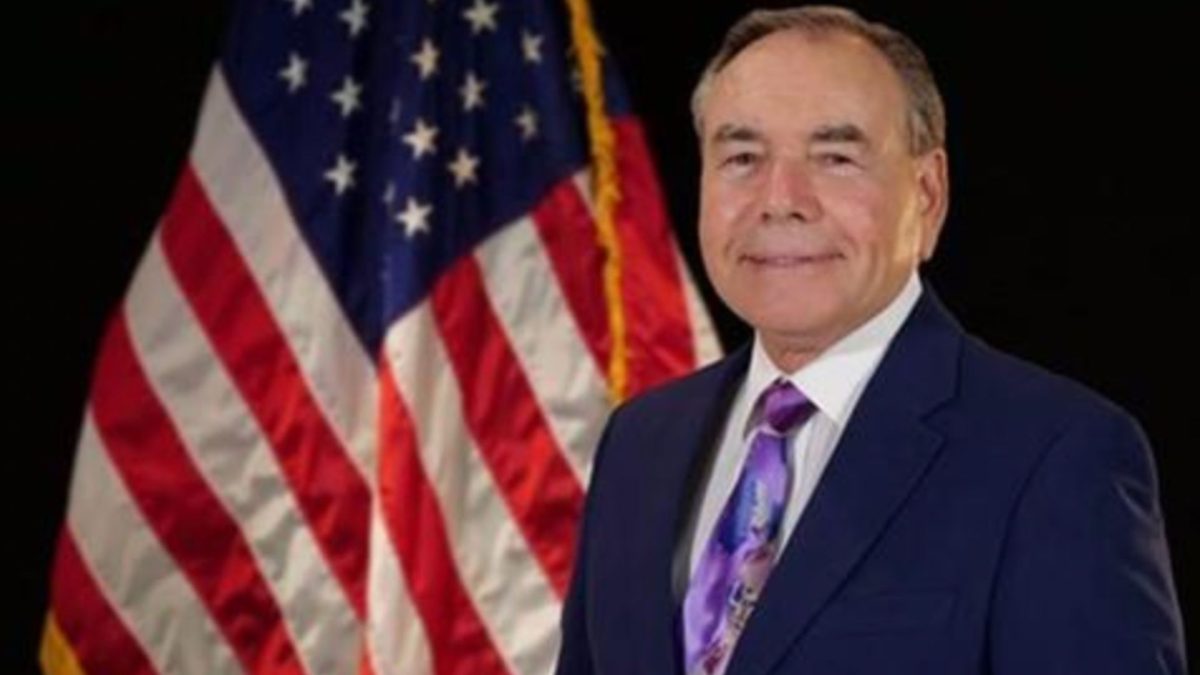


JUPITER, Fla. — In a sport built on superstition, spreadsheets and 162-game marathons, Chaim Bloom’s most enduring symbol may be a jar of gefilte fish more than two decades old.
The jar dates to Passover 2006 or 2007, during his early years with the Tampa Bay Rays, the result of a wager with a colleague who vowed to eat it if the team won the World Series. The Rays didn’t — and the jar remained sealed.
It has followed Bloom ever since, from Tampa to Boston, where he led the Red Sox for four seasons, and soon, to St. Louis, where he is now the Cardinals president of baseball operations. Whether it will ever be opened — and under whose rabbinic supervision — remains unresolved.
“If the Rays win and he insists we open it, we’d probably have to call a rabbi,” Bloom says, smiling. “But from my standpoint, I want to win it. So that’s what I’m trying to do.”
Unadjudicated and unopened, the jar travels with him — a preserved relic of ambition and unfinished business.
Gefilte fish is where our conversation started. From there, it went just about everywhere. In a wide-ranging interview at Roger Dean Stadium during spring training, Bloom spent more than an hour discussing the Cardinals’ rebuild, the challenge of guiding a franchise in transition and the daily discipline required to build a sustainable winner. But we didn’t stay confined to baseball operations. He talked about his Jewish upbringing, the steadiness faith and family provide, and how identity and history shape his outlook in a job that is both high-pressure and highly public. What emerged was not only a portrait of an executive mapping out the future of a storied franchise, but of someone whose personal values quietly inform the way he works.
Bloom turned 43 on Feb. 27th. He is married to Aliza Hochman Bloom, whom he met while both were undergraduates at Yale, where he studied Latin classics. She teaches at Northeastern University’s law school; she and their children — sons Isaiah, 11, and Judah, 9, and a 4-year-old daughter, will relocate from Boston to St. Louis in August. (He prefers not to disclose his daughter’s name, as she is the only one of his children not yet mentioned on his Wikipedia page.) Bloom is already settled into their new St. Louis home, though the realities of baseball life mean he will spend weeks at a time away from them.
“It is hard,” he says of the travel and the sacrifices for his job. “I wouldn’t be doing it if I didn’t think they were worth it, but that doesn’t mean every day is easy.”
That thought brings to mind a line from one of his favorite baseball movies, “A League of Their Own.” Near the end, when Geena Davis’ character tells manager Tom Hanks that she’s quitting because the game is too hard, he responds: “It’s supposed to be hard. If it wasn’t hard, everyone would do it.” Bloom nods at the memory. “I believe that about what we do,” he says. “There are sacrifices that come with this.”
| RELATED: Cards boss Chaim Bloom says fans’ passion was a key to taking job
Baseball as religion — and not
In St. Louis, baseball is often described as a religion. For Bloom, a Conservative Jew who attended day schools in Philadelphia — first Solomon Schechter, then Akiba Academy — and grew up in a home the eldest of two brothers where their mother taught Hebrew and French and their father was an ophthalmologist, religion is not metaphorical.
He understands the comparison, though he doesn’t dwell on it.
“In a baseball town like St. Louis, it’s not just a hobby. It’s not just a passion. It is just an inseparable part of people’s lives,” he says. “But my relationship to it, obviously because of the career that I’ve been fortunate enough to have, is a little different.”
As a child, he fell in love with the game without quite knowing why. “I just remember loving it. So many different aspects of it,” he says. “Anybody who loves it, you don’t have to explain it.”
He was 10 years old during the improbable 1993 Phillies run to the World Series, a worst-to-first Cinderella story that imprinted on him. “I sometimes wonder if they had just won the whole thing, would I have been satisfied and moved on to something else rather than spending the rest of my life chasing that? We’ll never know.”
He was not a standout player. “Little League was about as far as I went,” he says. But by high school and college, he found himself peeking “behind the curtain” at how teams are actually constructed — the strategies and analytics that go into them. Around that time, baseball’s power structure was beginning to shift. Teams were starting to value data, probability and fresh ways of evaluating talent, opening front offices to people whose strengths were analysis and decision-making rather than on-field performance. Suddenly, there seemed to be a path for someone like him. “The trickle turned into more of a flood,” Bloom says.
After graduating from college, he landed an unpaid internship with the Padres in 2004. When his beloved Phillies came to town that summer, he surprised himself by rooting against them.
“It just changes when you’re in it,” he says. “We are in this in part because we like to compete. … It just completely changes the relationship you have to your childhood team.”
He is proud of the work that followed, but wary of self-congratulation. “I don’t fully trust anybody who does not appreciate the role that luck may have played in whatever success they’ve had,” he says. “There’s only so much you control in life or in baseball. You have to get a little lucky to get some of the early opportunities that I was fortunate enough to get.”

Reset without sentimentality
The Cardinals are in what Bloom calls a “reset.” Jewish history, of course, is a story of loss and rebuilding. Does that long memory shape how he thinks about starting over?
“I haven’t thought about it that way,” he says. “When you’re in the job, you have to stay clear-eyed about what’s right in the moment and what path gets you where you want to go.”
There’s little room for abstraction. “We want to win, and this city expects a consistent winner,” he says. “We’re not there right now. My job is to figure out why — and how to get us back there as quickly and effectively as we can.”
He prefers not to frame the current strategy as patience. “I think that is absolutely the wrong way for us to think about this in the front office,” he says. The strategy may be longer-term, but the mindset must be urgent. “Whatever is on our plates on a given day, we need to attack that like it is game seven,” he says.
The offseason trades that brought in young pitching were not philosophical indulgences but practical moves. “The consistent production of starting pitching has been a hallmark of this organization whenever it has won consistently,” he says. “That hasn’t been the case as much in recent years, and we do have to get back to that.”
There is process behind everything — acquiring a player, developing one, running a game. “If you don’t have a process, you’re not as good as you should be,” he says. Baseball, like Judaism, is cyclical. “There are times of year that repeat. … You will encounter this moment of the year again. And you might encounter it every day, and you have a chance to either get better or you have a chance to get worse.”
A .300 hitter fails seven out of 10 times. Front offices miss, too. “You cannot be afraid of that,” Bloom says. After each trade this offseason, his group conducted an after-action review. “What do we like that we want to do more of the next time, and then what can we do better? What can I do better?
“You can learn from success, and you can learn from failure,” he says. “You can’t ever get stuck in things that don’t turn out well. You cannot get gun-shy, but it is important to learn from those things.”
Faith in a noisy world
In an era of rising antisemitism, Bloom is aware of the climate, though he says he has not felt it directly in any sustained way.
“Have I? Yes, but honestly, it has really not been front and center, and I feel fortunate about that,” he says. “I’m very aware, as a proud Jew, that there are plenty of people who, just because of my faith, want harm to come to me. That is sad. It’s not something I’m ever going to live in fear of.”
If his visibility offers encouragement to others, he welcomes that. But he is clear about his primary responsibility. “I have a responsibility to everybody in here, and everybody in Cardinal Nation, irrespective of my religion, or their religion, or anything like that, and I take that seriously first and foremost.”
When criticism inevitably comes, Bloom relies less on a single Jewish concept than on perspective — and family.
“In baseball we’re part of something bigger than ourselves,” he says. “That’s also true in life — with family, with your values, with your religious tradition.” Stepping back, he adds, can help “settle things down.”
What he values most about baseball is how it brings many different kinds of people together. In an increasingly polarized world, the sport still demands collaboration across backgrounds and beliefs.
“It’s very easy to be surrounded by people who think like you,” he says. “We don’t have that in baseball. We all have to work together toward a common goal.”
That shared pursuit — locking arms with people who may agree on little else — strikes him as both rare and powerful.
Playing the long game
In St. Louis, Bloom says he feels welcomed — by the Jewish community and by the broader fan base. Attendance may ebb in lean years, but the caring has not.
“People have not stopped caring about this team,” he says. “People care a lot.”
He says he and his family did not come to St. Louis for a short stay. “I wouldn’t have come here if I didn’t intend on doing this for a long time,” he says. The goal is to build something durable enough that the city’s faith — in baseball, in history, in renewal — feels rewarded again.
At home, Jewish life is less philosophical and more practical — three young children, two demanding careers, 162 games. He works seven days a week. He is not Shomer Shabbos, despite internet assumptions to the contrary. “That is not true,” he says plainly. “And I’m not proud that it’s not true. It just is the case.”
He does, however, unplug for the High Holidays — even if that means missing important games. “If you’re only going to observe the holidays when there’s not a game, then you don’t really mean it in my view,” he says.
He keeps kosher — eating dairy and fish when traveling but no non-kosher meat — a practice that becomes immediately visible in a profession built around shared meals. “If you work with me for even a small amount of time, you will see that,” he says. It has often opened doors to conversations — about differences, about tradition, about why it matters.
Baseball may not be Judaism. But for Bloom, both are sustained by rhythm, repetition, humility and the understanding that you are part of something larger than yourself.
And somewhere, waiting patiently in a jar, is a reminder that faith — in tradition, in process, in eventual redemption — is rarely simple, rarely immediate and always a little complicated.