

This story is part of “The Mezuzahs of St. Louis,” an ongoing series exploring the small sacred objects hanging quietly across our community, in homes, schools, synagogues and gathering spaces. Some are handmade. Some were carried across oceans. Some are touched thousands of times without anyone really thinking about it. Together, they tell the story of Jewish St. Louis, one doorway at a time. Do you have a Mezuzah with a story to share?
A few weeks after Crown Center dedicated its new Phase 1 building and Staenberg Commons, a smaller group gathered quietly one afternoon to hang the rest of the mezuzahs.
No speeches. No podium. No big ceremony.
Just residents, staff members and a few community supporters walking from doorway to doorway, deciding together which mezuzah belonged where.
ADVERTISEMENT

Because at Crown Center, those doorways are not symbolic.
They’re home.
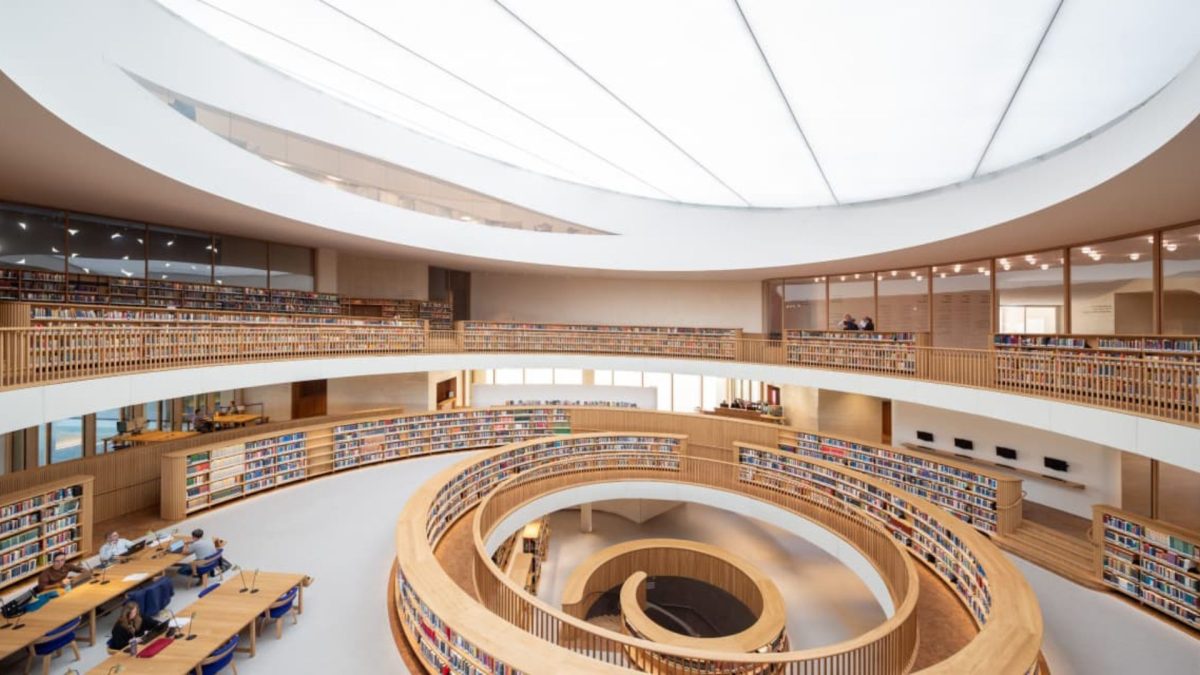
Today, eight mezuzahs hang throughout the campus, including at the entrance to Crown’s garden, the Weinberg Wellness Center, Circle@Crown Cafe, the Rosen Library, the art studio and the main entrance to the building itself.
And no two look remotely alike.
One is bright blue with colorful floral glasswork. Another is soft pink and translucent. One carries rainbow stripes. Another is carved from wood.
Together, they feel less like part of a building project and more like the people who live there: colorful, distinct and carrying histories of their own.
Crown Center mezuzahs became a community project
The mezuzahs were made possible largely through the efforts of Cindy Lander Wallach and her family, who selected many of the pieces during Crown Center’s recent expansion.

For Wallach, the project was never just about decorating a doorway.
She said mezuzahs serve as “constant and tangible blessings to the spaces where people live, work and play.”
But at Crown Center, the installation itself became part of the blessing too.
Community Relations Director Randi Schenberg remembers the larger dedication ceremony led by Rabbi Randy Fleisher of Central Reform Congregation, who brought music and prayer into the gathering with his guitar in hand.
“I remember holding the mezuzah up after we installed it with a special double-sided tape because I was afraid it would fall off and break,” Schenberg said, laughing. “It’s still there.”
What stayed with her even more happened later.
“A few weeks later, a small group of us hung the rest of the mezuzot during a quiet afternoon,” she said. “It was Cindy Wallach, Katie Garland, me and some residents. The residents chose the locations, picked which mezuzah fit best and said the prayer together.”
“Because this is their home, we found it to be the most meaningful of all the experiences.”
More than decoration on a doorway
Most art is protected from human hands.
Mezuzahs are designed for them.
People brush past these mezuzahs every day on the way to lunch, activities, doctor appointments and conversations with neighbors they’ve known for years. Some touch them intentionally. Others barely notice them.
Over time, they quietly become part of the rhythm of the building, collecting fingerprints, tiny scratches and years of routine.
At Crown Center, that rhythm carries extra meaning.
“The mezuzahs are a beautiful reminder of the sacredness of warm, inclusive spaces and caring for one another as we age,” Schenberg said. “It’s a reminder that we are more than just a building, we are a collection of homes and interwoven lives and traditions.”
One mezuzah now carries especially personal meaning for Schenberg.
In recent months, Crown Center received a handmade mezuzah created and donated by former Executive Director Nikki Goldstein, who recently began working in glass art. The piece was used during the dedication of the new library.

“Nikki’s mezuzah is the most meaningful to me because of how strongly I feel toward Nikki and her long devotion to our organization,” Schenberg said.
That may be what makes mezuzahs different from almost anything else hanging inside a communal building.
They are not meant to stay pristine.

ADVERTISEMENT