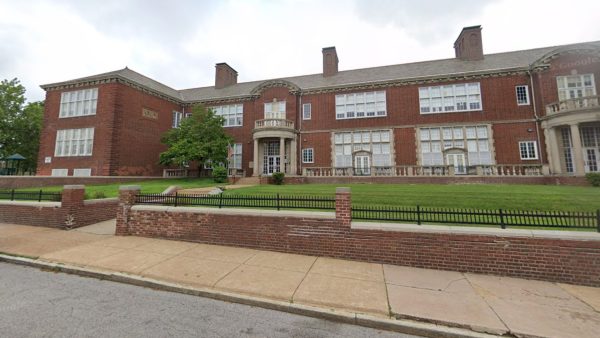
Inside Pierre Laclede Junior Career Academy in north St. Louis a quiet but ambitious experiment is unfolding.
Students come seeking physicals, counseling, health information, hygiene supplies and, sometimes, simply a safe adult willing to listen.
The school-based clinic initiative — developed with IFM Community Medicine — is part of a broader effort to bring healthcare directly into schools serving vulnerable children.
But in St. Louis, the effort also reflects something else: a long civic tradition of Jewish philanthropy and social engagement focused on education, healthcare and community well-being.
The Pierre Laclede initiative emerged partly through conversations tied to the North of Delmar effort, launched by civic leaders including Stuart Zimmerman, Eliot H. Sherman and Eric Marquardt to encourage reinvestment and opportunity in north St. Louis neighborhoods.
ADVERTISEMENT

Zimmerman said organizers intentionally focused early attention on the Wells-Goodfellow neighborhood, which they viewed among the city’s most challenged areas. A Washington. University practicum studied conditions there, and community conversations eventually connected civic leaders with IFM Community Medicine founder Dr. David Campbell.
“Let’s see if the nonprofits can work together and set up some programs north of Delmar,” Zimmerman recalled as the effort began.
Several Jewish civic leaders and philanthropists — including Zimmerman, Sherman, Michael Staenberg, Maxine Clark, Bob Fox, Patti Wolkowitz, and Debbie and Kent Hirshfelder — have supported initiatives connected to youth opportunity and educational support in underserved communities.
Clark spearheaded the transformation of the former St. Luke’s Hospital complex into Delmar DivINe, located less than two miles from Pierre Laclede. It’s a multi-tenant nonprofit and social-impact campus in north St. Louis designed to bring together organizations focused on education, healthcare, economic mobility and community development.
For many involved, the work reflects the Jewish concept of tikkun olam — repairing the world through practical acts that improve communities and strengthen lives.
The Pierre Laclede initiative arrives during a period of profound concern about student mental health, chronic absenteeism, housing instability and widening healthcare disparities.
A different healthcare model
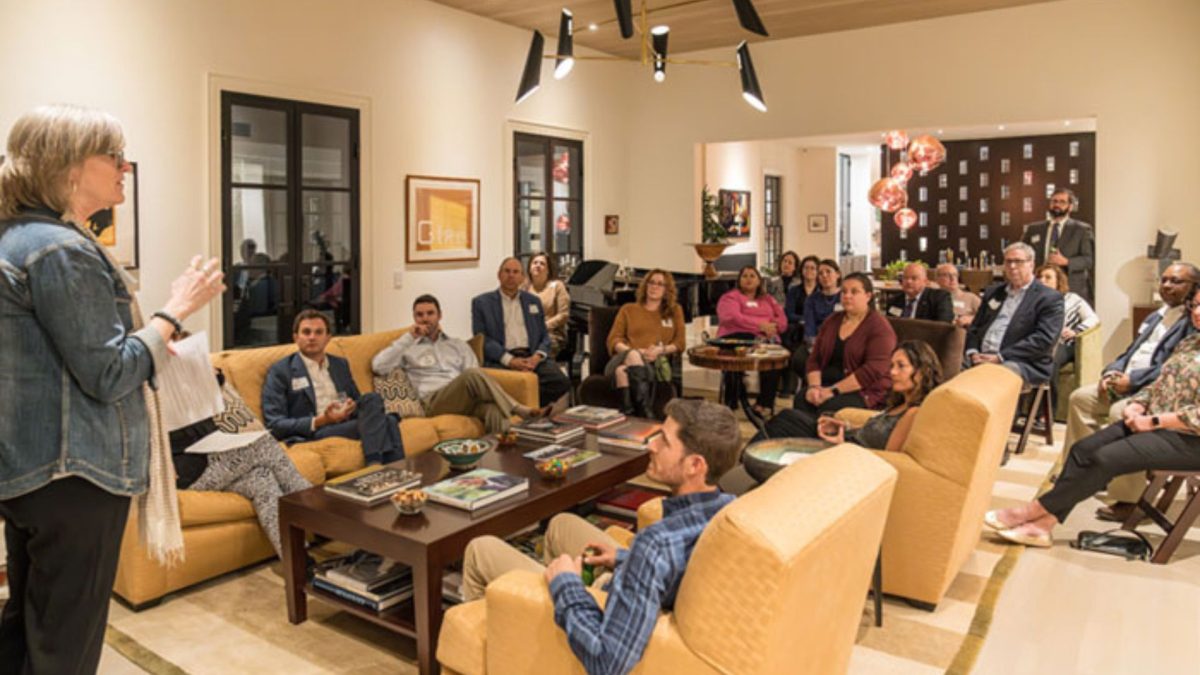
At a recent celebration for the clinic, Principal Kimberly J. Wilson did not begin with optimism.
She began with attendance.
“Right now attendance is at 65%,” Wilson told supporters and donors.
The figure reflects a broader attendance crisis affecting schools across Missouri and nationally since the pandemic. Missouri’s Department of Elementary and Secondary Education measures attendance partly through whether students attend at least 90% of the school year — the benchmark commonly used to identify chronic absenteeism. Statewide attendance rates have fallen sharply in recent years, particularly in high-poverty urban districts.
The stories coming from Laclede and other communities reinforce how healthcare problems increasingly spill directly into classrooms.
Students who cannot see clearly struggle academically. Students with untreated asthma miss school. Students carrying trauma or anxiety often disengage from learning altogether.
Some arrive in soiled or tattered clothing that makes them feel self-conscious.
“I need you to be able to concentrate,” Wilson recalled telling one of her students. “So, I’m going to give you a new shirt so you can go have a great day.”
The Pierre Laclede clinic reflects IFM Community Medicine’s broader philosophy of bringing healthcare directly into underserved neighborhoods rather than waiting for families to navigate complicated medical systems on their own.
IFM, a St. Louis-based non-government funded, nonprofit organization founded 26 years ago by Campbell and now led by Dr. Denise Buck, has long focused on embedding healthcare inside schools, churches, shelters and community settings. IFM currently provides health care services in more than a dozen area schools.
Campbell said underserved families often face overlapping barriers that traditional healthcare systems struggle to accommodate: transportation problems, work schedules, cost pressures, distrust and difficulty securing consistent appointments.
“If you think about the things that limit access to healthcare for an underserved population — transportation, cost and trust — we go where they already are,” Campbell said.
Rather than asking families to travel across the region for care, school clinics place healthcare inside buildings students already occupy daily.
Campbell said the organization intentionally favors smaller, flexible systems over large institutional structures.
“We’re flexible,” he said. “Willing to adjust to the situation, willing to adjust to the need.”
At Pierre Laclede, clinicians described helping students manage asthma, receive vaccinations and connect families with healthcare resources they otherwise might delay or avoid.
One clinician described a parent repeatedly relying on emergency rooms simply to refill asthma medication because transportation and scheduling barriers made routine care nearly impossible.
The stories reinforced how healthcare problems increasingly spill directly into classrooms.
For supporters of school-based healthcare, those realities are no longer peripheral to education. They are central to it.
Part of a larger movement
The movement toward school-based healthcare extends well beyond Pierre Laclede.
Across St. Louis and Missouri, schools increasingly are experimenting with partnerships that combine healthcare, counseling, social services and educational support inside school buildings.
Jason Purnell, president and CEO of the James S. McDonnell Foundation, has spent much of his career connecting health outcomes to education, housing, jobs and neighborhood conditions. In a recent podcast conversation with University City Superintendent Sharonica Hardin-Bartley, he put the matter plainly.
“A child who can’t see, can’t hear, hasn’t eaten, doesn’t know where they’re going to sleep tonight, and has been traumatized, can’t learn,” Purnell said.
That is the premise behind the growing push for school-based health care. It is not simply about placing a nurse or doctor in a school. It is about recognizing that children learn inside a larger social reality.
The foundation is supporting efforts to expand school-based healthcare in the University City School District, part of a broader recognition that schools increasingly serve as frontline institutions for children facing medical, emotional and economic instability. In University City, the foundation’s support will help the district expand access to behavioral-health counseling, student wellness services and partnerships designed to connect children and families with care before problems escalate into larger academic or emotional crises.
In Jennings, The SPOT at Jennings High School has operated for more than a decade through partnerships involving Washington University and St. Louis Children’s Hospital.
Dr. Sarah Garwood, who helps oversee the Jennings effort, said the clinic addresses preventive care, reproductive health, trauma, anxiety, depression, dental and vision needs and broader case-management issues.
One major lesson emerged after Ferguson and the killing of Michael Brown.
“We learned quickly how many students had witnessed violence or experienced traumatic events,” Garwood said.
School-based clinics, she said, can build trust in ways traditional healthcare systems often cannot.
Students return repeatedly. They develop familiarity with providers. Mental-health support becomes less stigmatized because it exists inside a familiar environment rather than a distant institution.
“Medical providers need to listen to and respond to the community,” Garwood said. “Building the relationship with the district and the community is critically important.”
The Jennings clinic also illustrates how school-based healthcare increasingly extends beyond medicine itself.
Ashley Randall, a Jennings High School graduate who now works as a caseworker inside the clinic, helps students navigate homelessness, anxiety, food insecurity, suicidal thoughts and isolation.
One student came to Randall overwhelmed by unstable housing and uncertainty about her future. Randall connected her with food resources, hygiene supplies and possible job-training pathways.
Weeks later, the student returned with improved grades, more stable housing and renewed optimism.
“They’re determined to live,” Randall said of the students she sees.
The sentence captured the emotional logic behind many school-based clinics.
Supporters increasingly view them not simply as medical facilities, but as stabilizing relationships embedded inside institutions children still encounter consistently.
Can the model last?
Missouri still lags many states in building coordinated school-based healthcare systems.
Mel Donatelli, program director for the Show Me School-Based Health Alliance of Missouri, said many programs remain fragmented and dependent on grants, philanthropy, volunteers and unusually committed local leaders.
That raises difficult sustainability questions.
The most durable models, Donatelli said, often involve federally qualified health centers capable of billing Medicaid and receiving enhanced reimbursement for underserved populations.
But many local efforts still rely heavily on philanthropy and community partnerships.
That creates a central challenge for Pierre Laclede and similar initiatives:
Can highly local, relationship-driven programs scale into stable systems without losing the flexibility and trust that make them effective?
Buck, at IFM, acknowledged the concern.
“St. Louis just can’t seem to get out of its own way sometimes,” she said, describing the region’s tendency toward fragmented institutions and siloed systems.
Yet supporters insist the need has become too urgent to wait for perfect structures.
Increasingly, schools may represent among the few remaining institutions capable of consistently reaching vulnerable children and families early enough to make meaningful interventions.
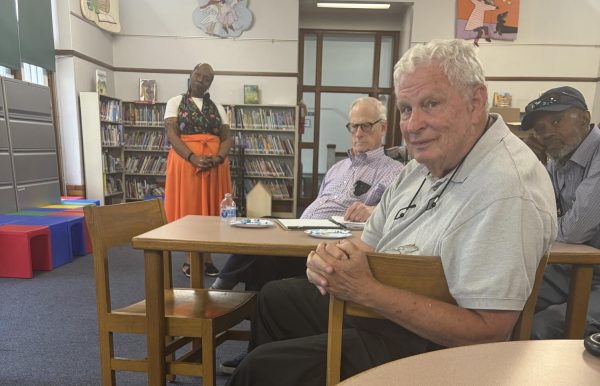
Former art teacher and Pierre Laclede graduate Bobby Willis sees the work as part of something larger than healthcare alone.
“I started learning my purpose,” Willis said during the gathering.
Now retired, Willis spends much of his time focused on neighborhood improvement and community engagement.
“You take what’s already there and make something nice with it,” he said.
That philosophy may ultimately define the school-based healthcare movement unfolding across parts of St. Louis.
Not sweeping institutional redesign.
Not grand civic master plans.
But smaller, deeply local efforts attempting to rebuild trust, stability and connection around children who increasingly need far more than academics alone.
Richard H. Weiss, is a former reporter and editor at the Post-Dispatch and also served on the board of the Jewish Light. He is currently chair of the River City Journalism Fund, rcjf.org, a non-profit organization, that addresses the need for stories about marginalized communities in these times and in this town.