
Long before World War II ended in Europe, Nazi ideology had already found supporters in St. Louis — a hidden chapter of local history now explored in “Nazis Next Door St. Louis,” a new exhibition at the St. Louis Kaplan Feldman Holocaust Museum.
There were rallies. Propaganda. Youth indoctrination efforts. Public organizing. Downtown protests. Local residents arguing over whether Nazism represented a dangerous movement or simply another political viewpoint protected by free speech.
And in some of the most unsettling images preserved from the era, Nazis marched openly in St. Louis streets and parks.
Opening June 12, “Nazis Next Door: St. Louis Faces Nazism in the 1930s” examines how extremist ideology spread locally during the years before the Holocaust, and how ordinary St. Louisans chose either to resist it or normalize it.
ADVERTISEMENT

A movement in plain sight
For many Americans, Nazism feels geographically distant — something associated almost entirely with Germany and Europe.
But historians say the reality inside the United States was far more complicated.
“I think there is a general sense that Nazism is something that was only supported in Europe,” said Dr. Robb Nelson. “The reality, however, is more complicated and fascinating.”
The exhibition traces how the German American Bund, a pro-Nazi organization active throughout the United States during the 1930s, established footholds across the country, including St. Louis.
According to the museum, the local Bund chapter reportedly reached roughly 100 members during the mid-1930s. Organizers attempted to make St. Louis a more visible regional hub for Nazi activity, including plans to host a conference of Midwestern Bund chapters in the city.
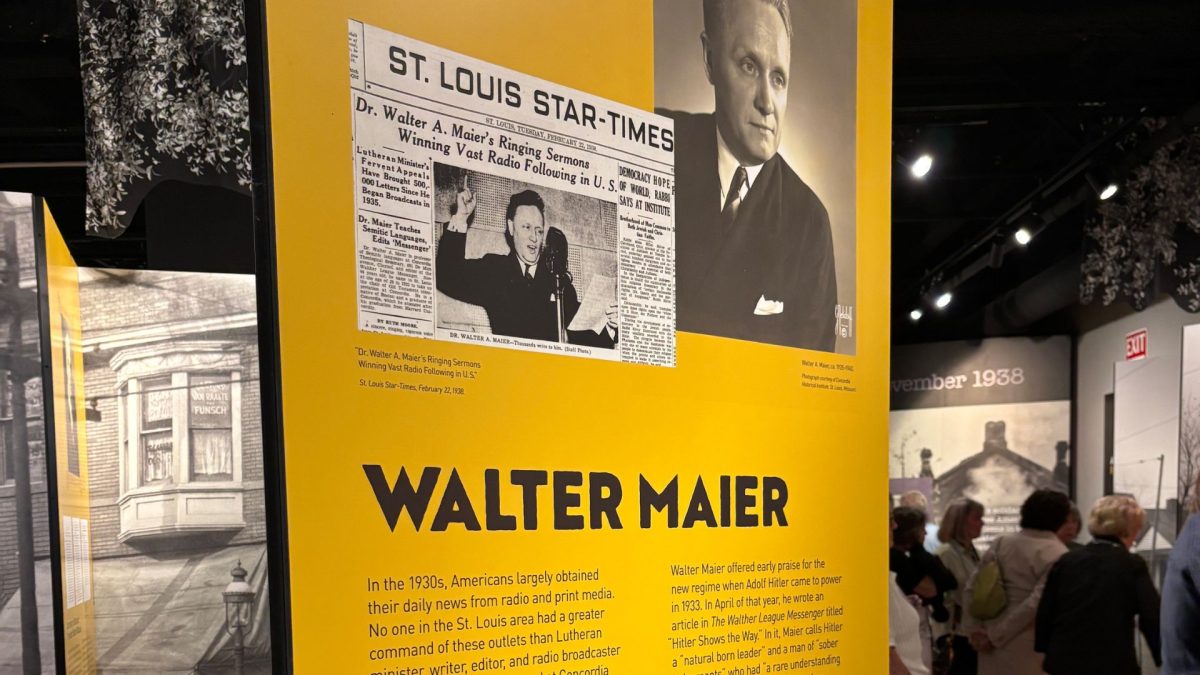
The exhibit also documents how Nazi propaganda spread through social clubs, public events, youth camps and exchange programs tied to Missouri universities.
“There were also individuals within the German government who went to great lengths to spread Nazi ideology in America through organized propaganda campaigns,” Nelson said.
Resistance in St. Louis
The story told inside the exhibition is not only about extremism. It is also about resistance.
One of the central figures highlighted is Fred Bottger, president of the St. Louis chapter of the American Legion, who infiltrated local pro-Nazi organizations during the 1930s and secretly gathered information about their activities.
“We have in our collection a series of letters Bottger wrote in 1936 to a local judge exposing their activities,” said Amy Moorman, director of archives and collections at the museum. “Bottger’s is a story of the power of an individual to enact change.”
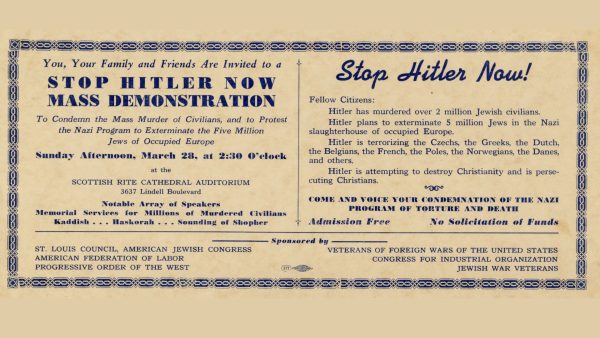
Moorman said she was also surprised while researching a large anti-Nazi rally held in St. Louis during the early 1940s.
“I was surprised to learn about the Stop Hitler Now rally that took place in St. Louis in 1943,” she said. “To learn that there were local groups organizing and thousands of people coming together to protest what was happening in Germany is a very powerful part of the story.”
That tension — between public acceptance and public resistance — became one of the defining themes of the exhibition.
Warning signs
Museum leaders acknowledge the exhibit arrives during another period of rising antisemitism and visible extremist rhetoric across the country.
But they say the goal is not political commentary.
Instead, the exhibition asks visitors to confront how easily dangerous ideas can become normalized when they are woven gradually into ordinary public life.
“It is not possible to tell a story from the past that is free of a point of view, and this exhibit is a statement about not ignoring warning signs,” said Executive Director Myron Freedman.
For Freedman, one of the most emotionally powerful parts of the exhibition is seeing how local and familiar much of the imagery feels.
“There are several,” he said when asked which artifacts stop visitors emotionally. “But certainly images of Nazis parading in St. Louis streets and parks is cause for some intense reflection.”
“It happened here”
The exhibition draws heavily from the museum’s own archives and collections, using photographs, letters and local historical records to reconstruct a period many St. Louisans may never have learned about in school.
For museum officials, the exhibit’s title captures the uncomfortable realization they hope visitors leave with.
Not simply that Nazism existed in America.
But that it existed here.
Exhibition Information
What: “Nazis Next Door: St. Louis Faces Nazism in the 1930s”
When: June 12 through Jan. 31, 2027. Museum hours begin daily at 10 a.m.
Where: Karpati Gallery, St. Louis Kaplan Feldman Holocaust Museum, 36 Millstone Campus Drive.
Cost: $8 adults; $6 college students, seniors, veterans and ages 10–17; $5 museum members; free for children under 10.