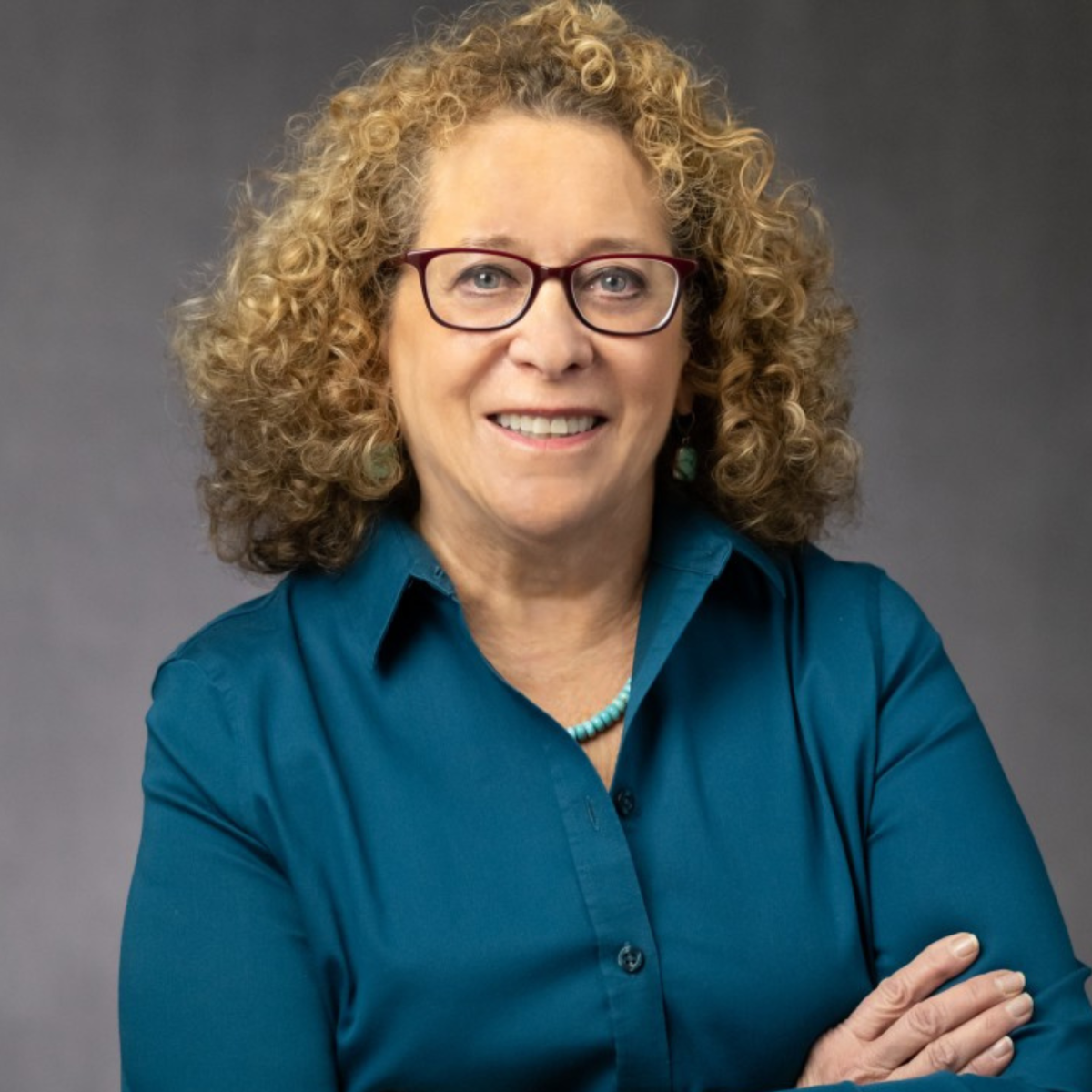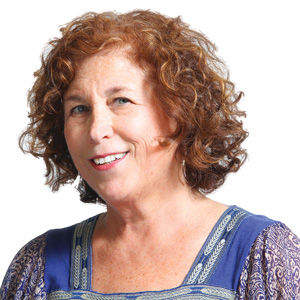

When Dr. Tish Singer walks into a room, there’s an easy confidence about her, the kind that comes from years in medicine and a decision to finally trust her own instincts. She was especially frustrated working at large healthcare systems, feeling as if it was impossible to implement new processes or change.
“There’s so many gatekeepers and levels of administration that physicians really don’t have much say of what actually happens in hospitals,” she said when we met the other morning. “I didn’t feel valued. I didn’t feel like my work was making a difference.”
Now, with Shero Imaging in Creve Coeur, she’s reimagining the playbook for women’s breast health, creating a place where cutting-edge technology meets personalized, immediate care, and patients don’t just receive results—they understand them as well as a path forward.
Perhaps, what’s most astonishing, is how she got to this point because it’s been anything but conventional. In college, she had an idea to become a doctor—until an advisor discouraged her after a disappointing test score. By 19, she was married (her husband, St. Louisan Alan Singer, was 21) and had three children before 25. Though she loved science, her early career took her into medical research at Washington University. For a decade, she explored the field while feeling the pull of something unfulfilled: patient care.
“I knew I wanted to be in healthcare. I kept trying to find things that I thought would make me as happy as being a doctor,” she said.
| RELATED: Move, learn, connect: a St. Louis morning for breast cancer prevention
ADVERTISEMENT

At 31, she applied to medical school. Twice. The second time, she got into the University of Louisville. She commuted weekly from St. Louis to Kentucky, leaving Sunday night and returning Thursday or Friday, while her children, then 10-year-old twin boys and an 8-year-old daughter, navigated fourth and second grades under Alan’s care.
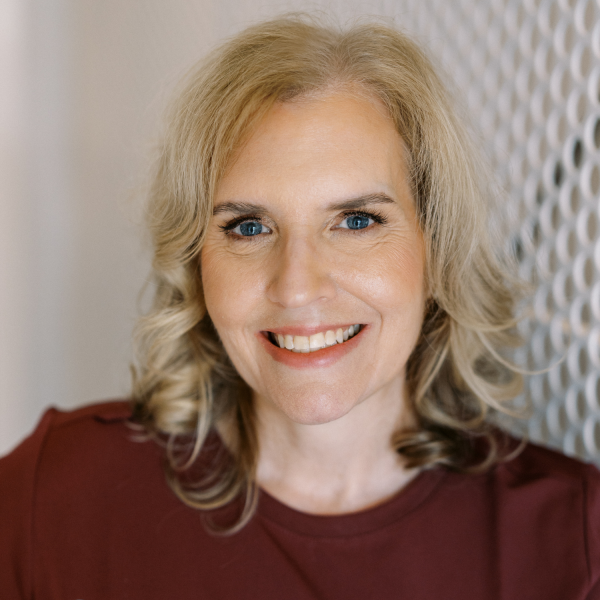
“Tish has always supported me in what I’ve wanted to do, and I knew being a doctor was her dream,” said Alan Singer, an attorney specializing in trusts and estates. “It was really important to me to do what was best for her. I was convinced she needed to be a doctor the first day I met her.”
Added Tish Singer, now 49: “It was hard on our family, but it made us stronger.”
By her third year, she transferred to St. Louis University, where she finished her training before heading to Brown University in Rhode Island—her home state—for a radiology residency and fellowship. The family stayed there for seven years, until around the time COVID hit. That’s when she and Alan decided it was time to come home. They wanted to grow their family—and bring up their kids in St. Louis. Today, they have five children, ranging in age from 26 to 4.
“Our home really was [Congregation] Shaare Emeth. We had a lot of great Jewish community friends in St. Louis that we didn’t have in Rhode Island,” Tish explained. “We just felt St. Louis was the best place to raise kids.”
From 2020 to 2024, Tish Singer worked in different capacities with different healthcare systems, including Barnes-Jewish, SSM and Mercy. She also started her own tele-mammography company, where she would read mammograms remotely for women nationwide.
“I thought that would be a way for me to get my autonomy back,” she said. “What I realized I wanted to do was ultimately change the way that healthcare was provided to women. I decided the only way I could change things was if I stepped outside the system.”
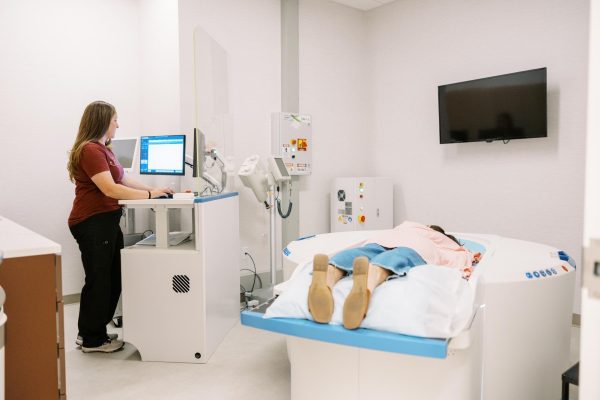
Shero Imaging was born from that decision. Singer envisioned a breast imaging center focused entirely on the patient experience. No hospital corridors or long waits. Women are seen quickly, get their results on the spot, and leave with answers and a clear plan for what comes next, even if that means scheduling follow-ups elsewhere.
“If additional imaging or procedures are needed, we can often do them the same day,” said Singer, who personally meets with every patient, reads images immediately and performs same-day biopsies when necessary. “I want people to forget they’re even at a medical facility.”
Opening Shero in July 2025 was between a $4 and $5 million investment, which the Singers financed through personal savings and loans. The clinic offers advanced imaging, including contrast-enhanced mammography for women with dense breast tissue, and the Vera breast CT—the only one in Missouri, according to Singer. With the Vera, patients lie face down on a table with their breasts in a hole; in just 14 seconds, a full 360-degree scan is completed, offering high-quality images without the discomfort of traditional compression.
“I’m early adopting this because I believe in it. In 10 years, this will likely be an alternative for women who don’t want mammograms or can’t tolerate them,” Singer explained.
The clinic’s patient base is diverse, she said. Roughly 40% arrive with concerns from abnormal screenings elsewhere. Others are uninsured, seeking high-quality care, or come from alternative health backgrounds, opting for ultrasound when mammograms aren’t feasible. Singer doesn’t accept insurance — for routine mammograms, the base price is $349 — which includes additional imaging if needed.
“I find that insurance makes the process of breast cancer screening much longer because of the need for referrals and prior authorizations,” said Singer.
Charli Prather-Levinson’s choice to go to Shero Imaging wasn’t just about getting a mammogram—it was about the whole experience. A survivor of uterine cancer at 27 and breast cancer at 35, and an oncology professional who has worked as a psychotherapist for 30 years, she knows the anxiety that can come with every screening. “It doesn’t matter how many years you’re a survivor. You’re always thinking, ‘What if it comes back?’” said Prather-Levinson, 62, who lives in Wentzville and converted to Judaism in 2001.
She learned about Shero through social media and a neighbor’s recommendation. From the moment she stepped inside, Prather-Levinson felt a difference. The facility is welcoming and thoughtfully designed, with a spacious Zen room stocked with beverages, plush seating and calming colors; soothing water installations; abundant natural light; comfortable room temperatures; and even a playroom for children – details that ease apprehension and fear. Humor is also woven into the décor (don’t miss the playful “boob wallpaper”). Even the staff makes a difference.
“If staff is stressed out, you feel it as a patient,” Prather-Levinson noted. At Shero, she says, everyone — from receptionists to technologists to Singer herself —¬ projects calmness and warmth, which immediately put her at ease.
She says clinical care is equally compelling. With dense breast tissue and a history of cancer, Prather-Levinson wants something more comprehensive than a standard annual mammogram. Shero allows her to access advanced imaging—like contrast-enhanced mammograms and screening ultrasounds.
“Even though I pay a lot of money for health insurance, they will not pay for anything other than a regular mammogram once a year. I need more for myself,” she explained. “In December I plan to do an ultrasound, or whatever Dr. Singer thinks makes the most sense for me. Then in June or July of next year, I’ll do a mammogram.” Being able to undergo supplemental imaging gives her peace of mind and more confidence in her ongoing health — and she doesn’t mind a little handholding along the way.
Singer sees Shero as part of a growing shift toward concierge-style, patient-centered care — a pushback against what she calls the “assembly-line model” of modern medicine. She says business has steadily grown since opening, fueled by social media, advertising and word-of-mouth. During October’s Breast Cancer Awareness Month, she hosted open houses and pop-up events to connect with the community.
And while Singer acknowledges that not accepting insurance can be a decisive barrier for some, she remains unwavering in her conviction. “I finally feel like I’m practicing medicine the way I always wanted to,” she said.