The St. Louis Kaplan Feldman Holocaust Museum will welcome its 100,000th later today—a milestone that deserves attention, but not for the reason most milestones do.
Yes, the number is striking. Since reopening in November 2022, the museum has averaged nearly 1,500 visitors each month, reaching tens of thousands of students from across Missouri, Illinois and beyond. But if we focus only on attendance, we risk missing what truly matters: what those visitors carry with them when they leave.
A visit to the museum is not passive. It asks something of you. Students do not simply learn that the Holocaust happened; they confront how it happened—how a modern society descended into mass murder fueled by antisemitism, enabled by indifference and sustained by silence. They hear directly from survivors and descendants, connecting history not to distant abstractions, but to human lives that began, unfolded, and were violently interrupted not so long ago.
That experience feels especially urgent now. Antisemitism is not confined to the past, nor is hatred in any form. The forces that made the Holocaust possible—dehumanization, conspiracy thinking, the erosion of truth—have not disappeared. They have adapted.
This is why institutions like Holocaust museums matter. And it is why their work cannot be taken for granted.
More than 30 years ago, founders Leo Wolf, Tom Green, Bill Kahn and Rabbi Robert Sternberg, in partnership with the Jewish Federation of St. Louis, set out to create a place where the lessons of the Holocaust would not fade with time. They understood something we are still grappling with today: memory is not self-sustaining. It requires effort, investment, and the willingness to confront uncomfortable truths.
ADVERTISEMENT
That mission was renewed in 2018 through a capital campaign to equip a new generation of descendants and educators to carry Holocaust education forward. This effort was made possible by the generosity and foresight of the Jewish community, led by Gloria Feldman, the Staenberg Family Foundation, the John D. and Sally S. Levy Foundation, Ruth and Alvin Siteman, Noemi and the late Michael Neidorff, Nancy and Ken Kranzberg, the Tilles Foundation and many others. The result is not just a building, but a living institution—one that depends on staff and volunteer educators, and committed board and community members, to remain relevant in a rapidly changing world.
And relevance is the point.
On paper, 100,000 visitors in fewer than four years is an extraordinary milestone. But numbers tell only part of the story. They cannot capture the student who lingers over a photograph, searching for meaning. They miss the quiet conversations around artifact cases—the shoes of a murdered child—or the moment a visitor hears testimony for the first time.
It is no coincidence this milestone coincides with Yom HaShoah: Holocaust Remembrance Day—a day that calls us to remember not in the abstract, but real individuals who witnessed unimaginable horror, whose families were decimated, whose communities destroyed. So, we say never again.
If this milestone means anything, it is this: 100,000 opportunities to challenge indifference.
The museum stands as both a testament and a warning. Its mission—to reject hatred, promote understanding and inspire change—is not aspirational. It is necessary. The question is not whether the museum will continue this work. It is whether we, as a community, will meet it with the same urgency.
Because the lessons of the Holocaust are not self-executing. They depend on what we choose to see, to remember, and ultimately, to do.
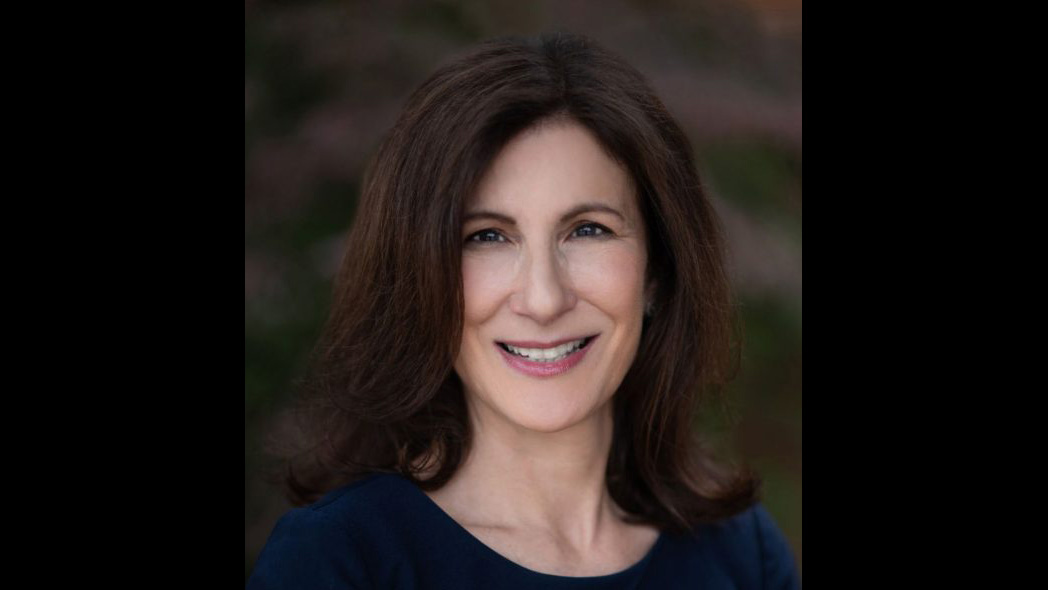
Myron Freeman is executive director of the St. Louis Kaplan Feldman Holocaust Museum.
ADVERTISEMENT