
For nearly four decades, Gene Carton’s voice appeared in the “letters to the editor” pages of the St. Louis Post-Dispatch and the St. Louis Jewish Light — steady, opinionated, unmistakably his. Last month, that voice went silent when Robert Eugene “Gene” Carton passed away after a long battle with kidney disease.
I first noticed Gene during my years at the Post-Dispatch, where he was known as a persistent and prolific letter writer. A friend and former P-D colleague, Dale Singer, recalled that Gene was the reason the newspaper’s editorial board instituted a policy limiting contributors to one published letter every 30 days.
It wasn’t until I joined the Jewish Light that I got to know Gene better — and his distinctive approach to letter writing. The Light has its own policy, allowing letters from the same writer once every 60 days. Gene respected that, but as the 60 days ticked down, he would often send several letters at once, each on a different topic, letting us editors decide which to print. He never ran out of things to say.
At Gene’s eulogy, Kol Rinah Rabbi Noah Arnow noted that a search of the Post-Dispatch website showed 182 published letters from Gene covering everything from President Donald Trump to Cardinals baseball (he was a passionate fan), free speech, foreign policy, a shocking photo of a bear someone had killed and even the need for a supermarket in Olivette. The P-D website archives letters only back to November 2006, though Gene first started writing to the paper in February 1987. His final published letter, dated Dec. 3, 2025, defended lawmakers who were also veterans against attacks by Trump.
ADVERTISEMENT

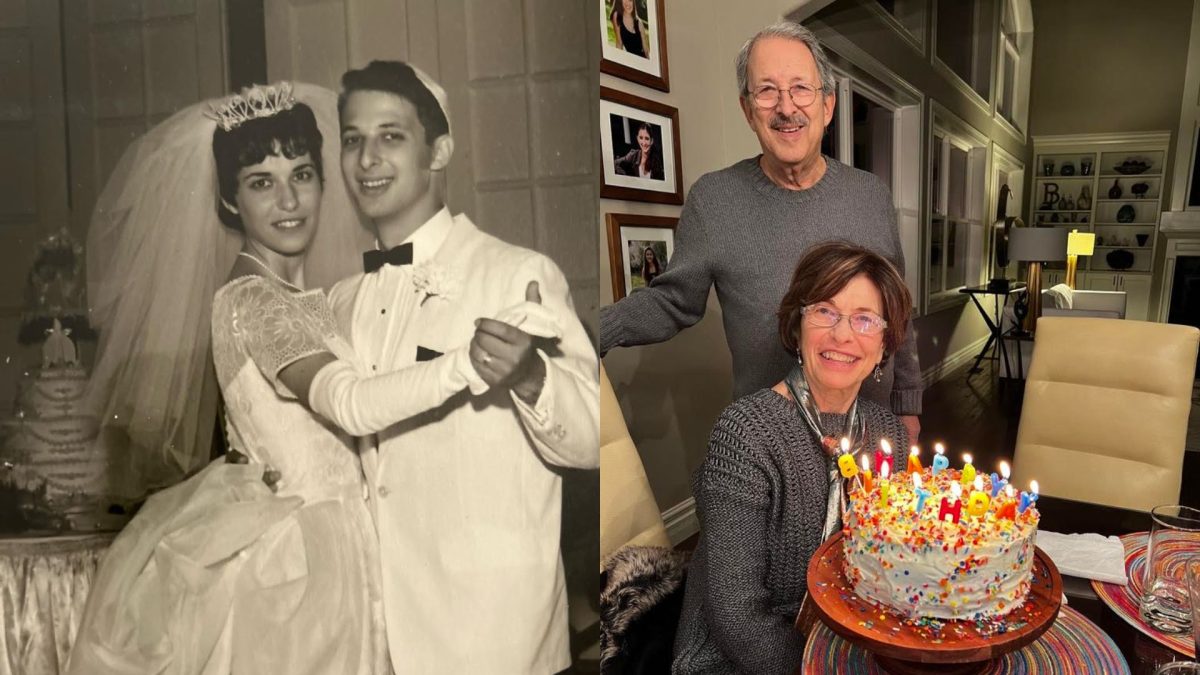
At home in Olivette, his wife of 32 years, Linda Carton, experienced Gene’s letters differently — not as bylines, but as a rhythm that shaped their life together. He wrote a lot, she said: a couple of nights a week, sometimes an entire evening at the computer, lost in thought, tapping out responses to the world as he saw it. That was his “happy time.” She would do her own work nearby, the quiet hum of the room punctuated by the sense that Gene was, in his own way, conversing with the city and its residents.
The letters didn’t start at the beginning of their relationship. But by the time they married in 1994 after a 20-year on-and-off courtship that began with a chance meeting at a singles event, Linda knew this was something he loved. Writing gave Gene a voice he had trouble claiming elsewhere.
He didn’t always run his ideas by her first. Often, he would read the finished letters aloud after they were published, letting her hear them in his own voice. Even then, he could still surprise her.
“I was surprised by all of his opinions,” Linda said with a hint of affection.
Most responses to his letters were what you’d expect: disagreement, pushback, the blatant “you’re wrong.”
Occasionally, though, a letter would go further. Linda remembers one in particular, something she can’t fully recall now, that unsettled her in a way it never did him.
“He was like, ‘Oh, don’t worry about it, it’s just somebody mouthing off,’ ” she said. “It didn’t affect him. It kind of affected me.”
Those moments were rare. What remained over decades was constancy: Gene at the computer, Gene with something to say, Gene sending his thoughts into the world. She wishes now she had kept the letters — the clippings, the responses, the record of it all.
“We’re all geniuses in hindsight,” she said.
At the time, it was just part of everyday life.
Gene wasn’t just confined to the letters’ pages. Post-Dispatch columnist Bill McClellan and former P-D columnist Sylvester Brown both wrote about him. The first McClellan column about Gene, on June 26, 1998, quoted him describing seeing his first published letter in 1987 as “exhilarating.” By then, Gene said, he had become “obsessed,” writing about once a week.
When McClellan asked what motivated him, Gene explained that while letters gave him a voice on topical issues, they also gave him purpose. He never felt he had achieved career success. A Clayton High graduate, he attended Washington University for a couple of years but didn’t much like college. He worked in credit and later collections, primarily as a telemarketer—a job that let him talk to people, which he loved.
But his true loves were clear: Linda, the Cardinals and letter writing, in that order.
In the end, the writing outlasted almost everything else. Through jobs he didn’t always love, through years of routine and change, through illness that slowed but never silenced him, Gene kept writing. Dialysis began in 2023. A broken hip led to repeated stays in rehab. And then, near the end, a mass on his pancreas complicated matters. He died quietly, slipping out of consciousness as his body finally gave way.
But Gene was more than his letters. He was the man who spent evenings thinking through his arguments, who kept writing even when pushed back, who believed deeply in saying something.
Today, as I told Linda after Gene’s passing, there is an absence that’s hard to miss. Like clockwork, I would receive a letter from Gene before every major Jewish holiday wishing me and my family well. This Passover just wasn’t the same without Gene’s kind “Chag Pesach Sameach.”
Rest in peace, Robert Eugene “Gene” Carton. No question: You were, and will remain, a man of letters.
ADVERTISEMENT