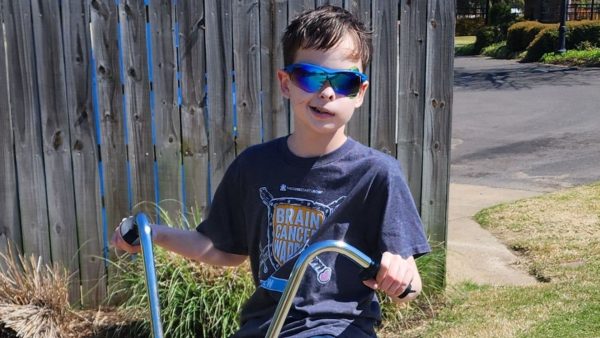
I first got to know Drew Patchin and his family five years ago, when he was a 7-year-old cancer survivor and, improbably, the victim of a robbery.
It was the 2020 holiday season, and Drew was outside a Walgreens in Creve Coeur with his aunt, Debbie Schultz, and Emily Dyall, founder of the Bennett Project, a nonprofit supporting kids with cancer. They were raising money for the organization when a man jumped out of a car, grabbed their donation jar and sped away.
At the time, the story felt like a cruel irony piled onto an already unfair childhood. Drew, who had been diagnosed with a rare brain cancer at age 6, couldn’t understand why anyone would steal money meant to help kids like him. But what followed softened the sharp edges of the moment.
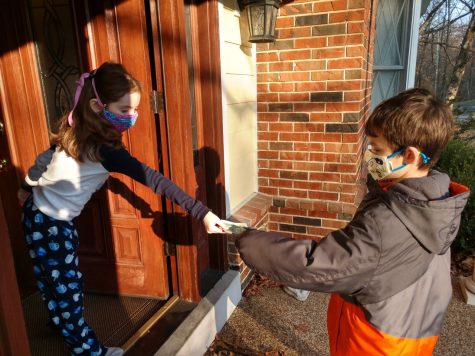
Word spread quickly. Led by Drew’s rabbi, Amy Feder, and the Temple Israel community, people showed up — with checks, cash and quiet acts of generosity. The stolen money was replaced, and then some. Drew learned that while there is real meanness in the world, there is also an abundance of kindness.
What mattered most to him wasn’t the theft or even the outpouring that followed. He was simply glad that children sick with cancer would still have toys and small comforts to brighten their holidays.
Over the next five years, Drew grew up in the public eye and out of it — a boy who kept living, learning and hoping while carrying a diagnosis that never fully loosened its grip. On Thursday, Jan. 1, 2026, at roughly 7:30 p.m., after years of battling Anaplastic ependymoma, Drew died.
He was 12 years old.
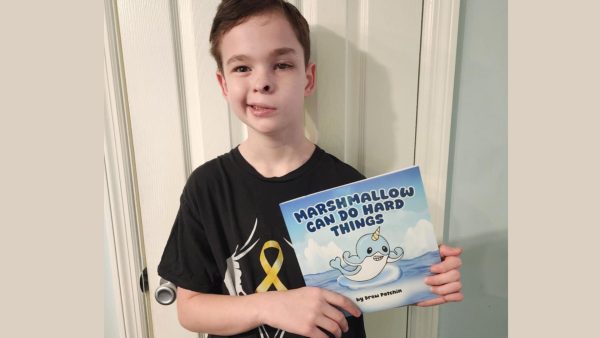
The last time I wrote about Drew was in December, updating readers on how he was doing. In August, he had released his debut children’s book, “Marshmallow Can Do Hard Things.” In November, he became a bar mitzvah.
Ten days before that bar mitzvah at Temple Israel, Drew underwent surgery to relieve fluid from his brain — his 20th operation.
And yet, in unmistakable, superhero Drew Patchin fashion, he stood on the bimah and celebrated with family and friends.
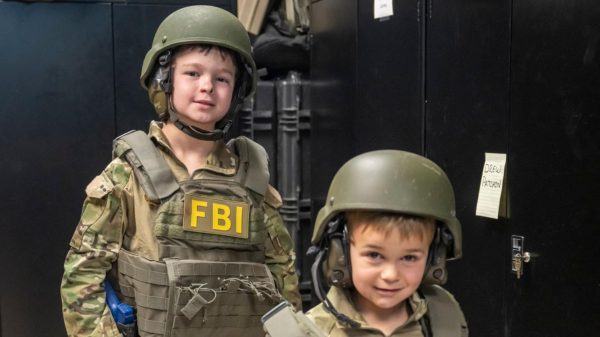
Half of Drew’s life was spent fighting cancer, measured in hospital stays, surgeries, procedures and recoveries. But just as often, it was measured in moments he refused to miss. He proudly served as an honorary parade marshal of the 2023 St. Patrick’s Day Parade, became a Junior FBI Agent and joined the UMSL Tritons baseball team. Also in 2023, his dream of being famous came true when he hosted the “Fox 2 Morning Show.”
Through the generosity of pediatric cancer organizations, along with family and friends, Drew and his parents, Jennifer and Doug Patchin, created a life filled with joy and memory-making. Alongside his little brother and best friend, Tyler, now 8, and his beloved Aunt “Bebbie” Schultz, Drew traveled often, with a special love for Disney cruises and adventures.
He had an affinity for mascots. His favorites included Fredbird and Louie, along with Disney’s Dopey and the mischievous duo Chip and Dale — characters that brought him laughter, comfort and moments of pure, uncomplicated joy.
At Drew’s funeral on Sunday, more than 400 people filled Temple Israel’s sanctuary to pay their respects, with many more joining via livestream. Some had never met Drew or the Patchins, but they had followed his cancer journey — the triumphs and the setbacks — through social media posts shared by his mother and his aunt. They were part of what came to be known as “Drew’s Crew.” Some even wore their Drew’s Crew T-shirts to the funeral.
When I first started reading those Facebook posts, I wondered about the balance between privacy and sharing. But it quickly became clear that Jennifer and Debbie weren’t just updating people — they were building a community. Through their posts, people from across the country and around the world came to know Drew. They sent cards, small gifts and messages meant to cheer him up and to let the family know they cared. Drew loved it. He liked the idea that people knew who he was. He liked, as he often said, being famous.
And sometimes, that widening circle made a tangible difference. A Parkway Central High School friend of Jennifer’s, now a physician in North Carolina, helped connect her with doctors at Duke University’s Brain Tumor Clinic. A college friend helped broker a visit to MD Anderson Cancer Center in Texas, one of the world’s leading brain tumor treatment and research centers. Each post opened another door. Each connection carried hope.
In the end, Drew succumbed to the devastating toll his cancer took on his young body. In death, as in life, he is still giving: his brain is being donated to Gift for a Child, an organization that advances pediatric brain cancer research through tissue donation.
When I asked Jennifer and Debbie what people can do for the family now, they offered three simple requests: Go out and do something kind for someone. Buy Drew’s book, with proceeds benefiting the Bennett Project. Or make a donation in Drew’s memory to a pediatric cancer organization.
For those who knew Drew — and even for those who only knew his story — he will be remembered not for the way his life ended, but for how he lived it. Five years ago, he stood outside a Walgreens with a donation jar, trying to help other kids with cancer. What followed then, and what followed again in the years after, was something bigger: a community that showed up, kept giving and chose kindness. Drew understood that kind of generosity early on. And it is the legacy he leaves behind.